The CSIA says water causes more chimney damage than fire. Here's what that means for Bristol County homeowners and what to do about it.
Share:

The Chimney Safety Institute of America has said it plainly: water causes more annual damage to masonry chimneys than fire does. That’s not a marketing line — it’s the industry’s own finding, backed by decades of field data. For homeowners in Bristol County, MA, that statement carries extra weight. Between the coastal salt air off Buzzards Bay, the wet southeastern Massachusetts climate, and the freeze-thaw cycles that hit this region harder than most people realize, your chimney is dealing with a lot. This page explains what’s actually happening inside your masonry, what the warning signs look like, and what a good masonry contractor does to stop the damage before it compounds into something much more expensive.
Brick looks solid, but it’s naturally porous. Water doesn’t need a crack to get in — it seeps through the surface of the brick itself, through aging mortar joints, and through any gap in the crown or flashing at the roofline. Once it’s inside the masonry, the real damage begins.
The CSIA puts it directly: all masonry chimney construction materials, except stone, will suffer accelerated deterioration as a result of prolonged contact with water. That includes the brick, the mortar, the liner, and any metal components inside the system. Water doesn’t just sit there — it moves, it reacts, and in a New England winter, it freezes.
Here’s the mechanics of it. Water works its way into the pores and joints of your masonry. When temperatures drop to 32°F or below, that water freezes and expands — by roughly 9% in volume. That expansion pushes outward against the surrounding brick and mortar with significant force. When temperatures rise again, the ice melts, the water migrates a little deeper into the structure, and the cycle repeats.
In southeastern Massachusetts, this doesn’t happen once or twice a winter. It can happen dozens of times. And coastal Bristol County is actually more vulnerable than colder inland areas, because temperatures here frequently hover right around the freezing point rather than staying consistently below it. More oscillation around 32°F means more freeze-thaw cycles, not fewer.
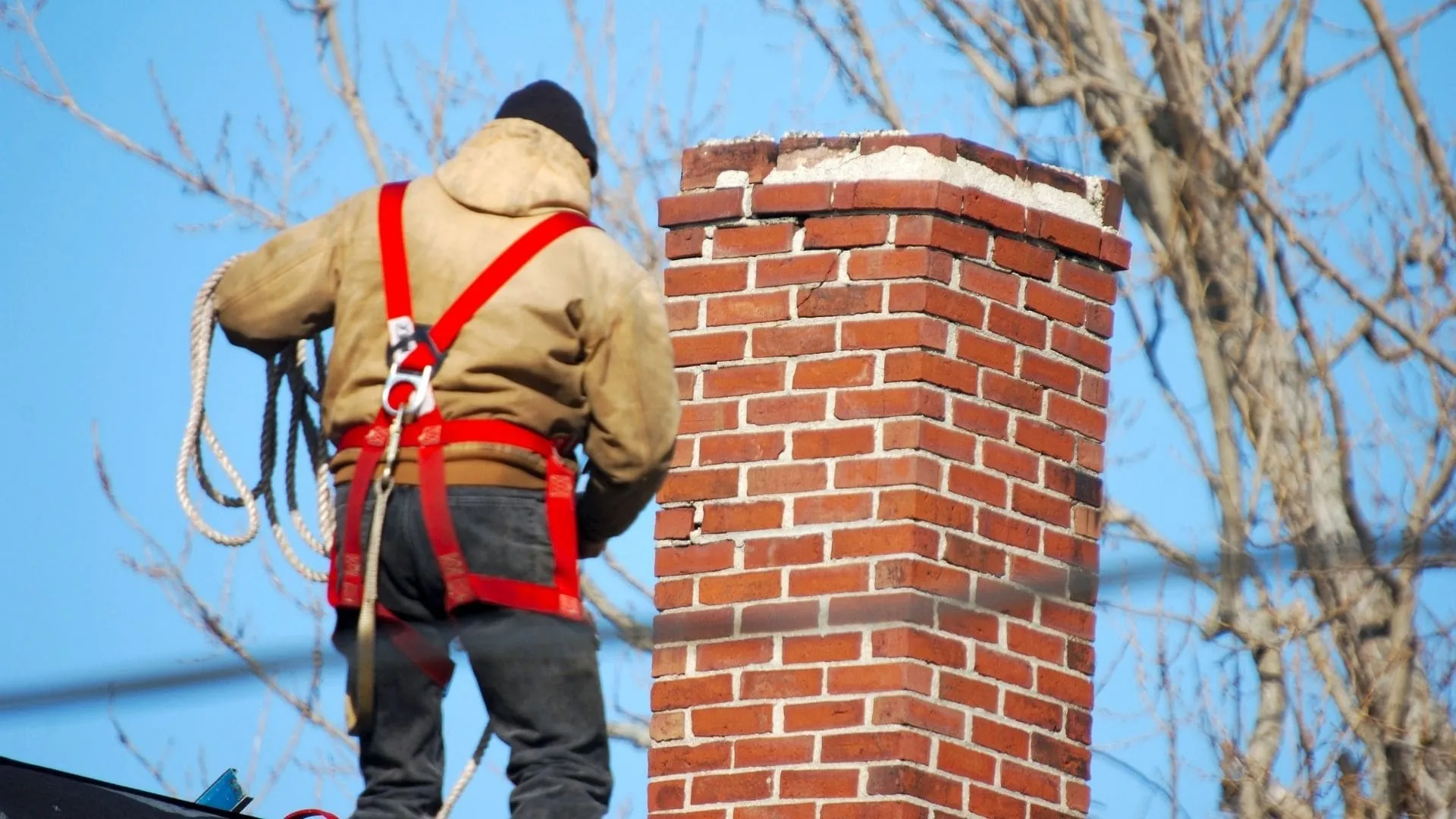
The cumulative result is what you see when bricks start to flake and chip — that’s called spalling, and it means the internal pressure has exceeded what the masonry can hold. You’ll often notice debris collecting at the base of the chimney before the damage is visible from the ground. Mortar joints tend to go first, since mortar is softer than brick. Once the joints start to open up, water has a direct path into the chimney body, and the deterioration accelerates from there.
Left alone, this process doesn’t plateau. Each winter, the existing cracks admit more water, which creates larger cracks, which admit even more water. A chimney that has minor mortar erosion today can have serious structural compromise in five to ten years — not because anything dramatic happened, but because water kept doing what water does.
Some signs of chimney water damage are obvious. Bricks falling off, water stains on the ceiling near the fireplace, a rusted damper that won’t open — these get noticed. But a lot of the early warning signs are easy to rationalize or overlook entirely.
Efflorescence is one of them. That’s the white, chalky staining you sometimes see on the exterior of a chimney. Most people assume it’s cosmetic. It’s not. Efflorescence is what happens when water moves through the masonry, dissolves the minerals inside, and deposits them on the surface as it evaporates. It’s a reliable sign that water is actively migrating through your chimney’s structure.
Mortar joint erosion is another one that gets minimized. If you look closely at the joints between your bricks and the mortar appears recessed, crumbling, or shows hairline cracks, that’s not just wear — it’s the primary entry point for water into the chimney body. Industry standards suggest that more than about 6mm of mortar erosion is a meaningful warning sign, and that mortar joints can begin showing deterioration in as little as 20 to 30 years. For homeowners in New Bedford or Fall River with homes built in the early 1900s, that math is worth thinking about.
There’s also the smell. When water mixes with creosote inside a wood-burning chimney, it produces a distinctive, unpleasant odor that tends to be strongest in humid weather or after rain. If you’ve noticed a musty or smoky smell coming from your fireplace even when it hasn’t been used, water is almost certainly involved.
One thing worth understanding: water damage to your chimney doesn’t stay in the chimney. Water that enters through a compromised crown or failed flashing can migrate through the masonry and show up on interior walls or ceilings well below the actual entry point. By the time you see the stain inside your home, the damage path is often longer and more extensive than it looks.
The good news is that water damage is almost entirely preventable — and when it’s caught early, the repairs are straightforward and relatively affordable. The challenge is that most homeowners don’t think about their chimney until something visible goes wrong, and by then, the damage has usually been building for a while.
Preventative chimney maintenance in Bristol County comes down to a few core services: waterproofing the masonry surface, repairing or replacing the crown, addressing any failed flashing, and tuckpointing deteriorated mortar joints before they become structural problems. Done in the right order, with the right materials, this kind of maintenance can protect a chimney for a decade or more.
This is one of the most important distinctions in chimney maintenance, and it’s one most homeowners don’t know about until they’ve made the mistake once.
Consumer-grade sealants — the kind you can buy at a hardware store — are typically non-breathable. They form a film over the masonry surface that blocks liquid water from getting in, but they also trap moisture vapor inside the masonry. In a New England climate where chimneys are constantly cycling through wet and dry conditions, that trapped moisture has nowhere to go. It builds pressure from within, and the freeze-thaw cycle does the rest. You’ve essentially sealed the damage in rather than sealing it out.
Professional waterproofing products like ChimneySaver work differently. They’re vapor-permeable, meaning they block liquid water from penetrating the masonry while still allowing moisture vapor to escape from inside. ChimneySaver blocks over 96% of water penetration and, when applied correctly to masonry in good condition, can protect a chimney for ten years or longer. That’s the product specification, and it’s why we use it specifically for Bristol County chimneys rather than a generic sealant.
Waterproofing is also not a standalone fix. Before any sealant goes on, a thorough inspection needs to identify existing damage — cracked crowns, open mortar joints, failed flashing — and those issues need to be addressed first. Waterproofing over damaged masonry just delays the inevitable. The sequence matters: repair first, then seal.
For homes along Buzzards Bay — in Dartmouth, Westport, Acushnet, Fairhaven, and Swansea — the salt air component makes professional waterproofing even more important. Salt-laden moisture is more aggressive than standard rainwater, and it has a measurable effect on both mortar chemistry and metal components like flashing and chimney caps. We apply products rated for coastal conditions, because we understand what coastal exposure actually does to masonry.
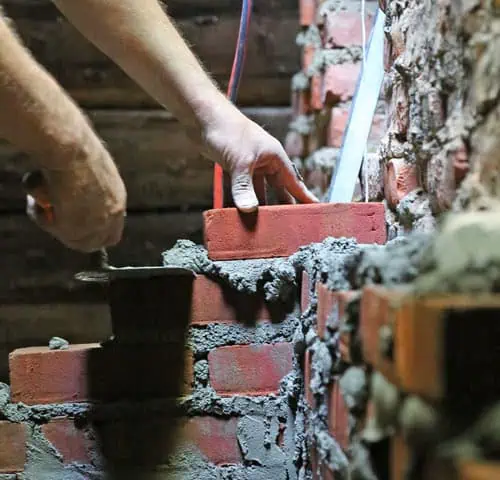
Tuckpointing — sometimes called repointing — is the process of removing deteriorated mortar from the joints between bricks and replacing it with fresh mortar. It’s one of the most effective masonry repairs there is, and it’s also one of the most misunderstood.
A lot of homeowners think of tuckpointing as a cosmetic service. The chimney looks a little rough, you clean it up, it looks better. That’s not wrong, but it’s incomplete. Mortar joints are the primary water entry point on most chimneys. When they deteriorate, they stop doing their job of keeping water out, and the brick faces and the chimney interior become directly exposed. Tuckpointing restores the water barrier, not just the appearance.
There’s also a material science component that matters. Mortar isn’t one thing — it varies in hardness, composition, and flexibility. If the mortar used in a repair doesn’t match the existing mortar closely enough, the two materials will expand and contract at different rates through temperature cycles. Over time, that mismatch creates new stress fractures right along the repair lines. We analyze the existing mortar in your chimney and replicate it — color and composition — before any tuckpointing work begins. It’s a step that adds time to the job and requires expertise, but it’s the difference between a repair that holds and one that needs to be redone in a few years.
For homeowners in New Bedford’s historic district, or in Fall River’s older triple-decker neighborhoods, this matters even more. Chimneys in these homes are often 80 to 120 years old, and the original mortar formulations from that era are softer and more flexible than modern mixes. Using a hard Portland cement mortar on a 19th-century chimney can actually accelerate brick deterioration, because the brick becomes the weakest link in the system. Historic restoration requires matching the original mortar’s characteristics, not just its color. We’ve been doing this kind of work in Bristol County since 1999, and we know the difference.
One practical note on timing: tuckpointing can’t be done in freezing temperatures, and it needs adequate curing time before the first hard rain. Spring and early fall are the best windows for masonry repair work in southeastern Massachusetts — and they’re also when homeowners are most likely to notice winter damage and pre-season concerns. If you’re seeing mortar erosion now, it’s worth addressing before another winter adds to it.
Water damage to a chimney is slow, quiet, and almost entirely preventable. The homeowners who end up with the largest repair bills are rarely the ones who had the worst luck — they’re usually the ones who noticed something small and waited to see if it got better. It doesn’t get better. It gets more expensive.
The right masonry contractor will inspect the full system before recommending anything, document what they find with photos, match your existing mortar when tuckpointing, and use a professional-grade waterproofing product that’s appropriate for your chimney’s condition and your local climate. In Bristol County, that means accounting for coastal exposure, freeze-thaw cycles, and in many cases, housing stock that’s been standing for a century or more.
If you’re seeing any of the warning signs described on this page — mortar erosion, spalling, water stains, efflorescence, or a smell you can’t explain — it’s worth getting a proper assessment before another winter. We’ve been serving Bristol County homeowners across Dartmouth, Westport, Fall River, New Bedford, Mansfield, Taunton, and the surrounding communities for over 25 years. Reach out and we’ll give you a straight answer about what your chimney actually needs.
Article details:
Share:
Continue learning: