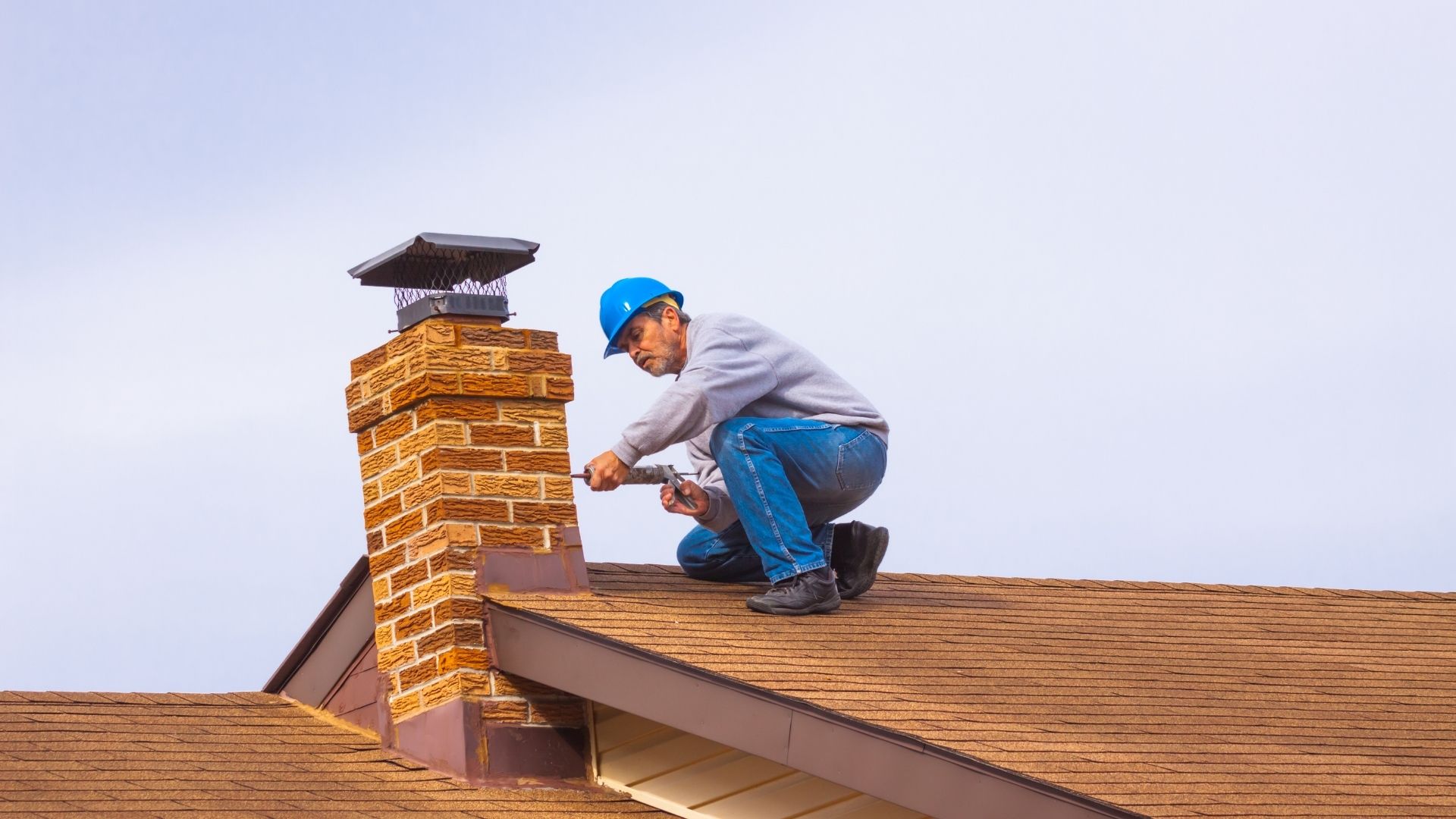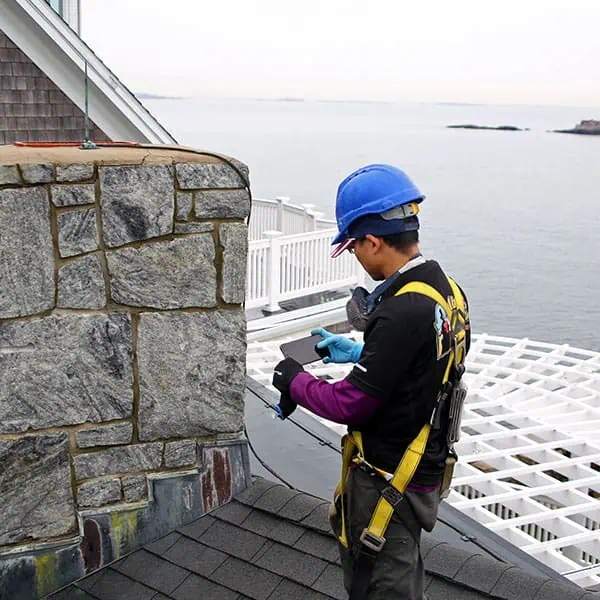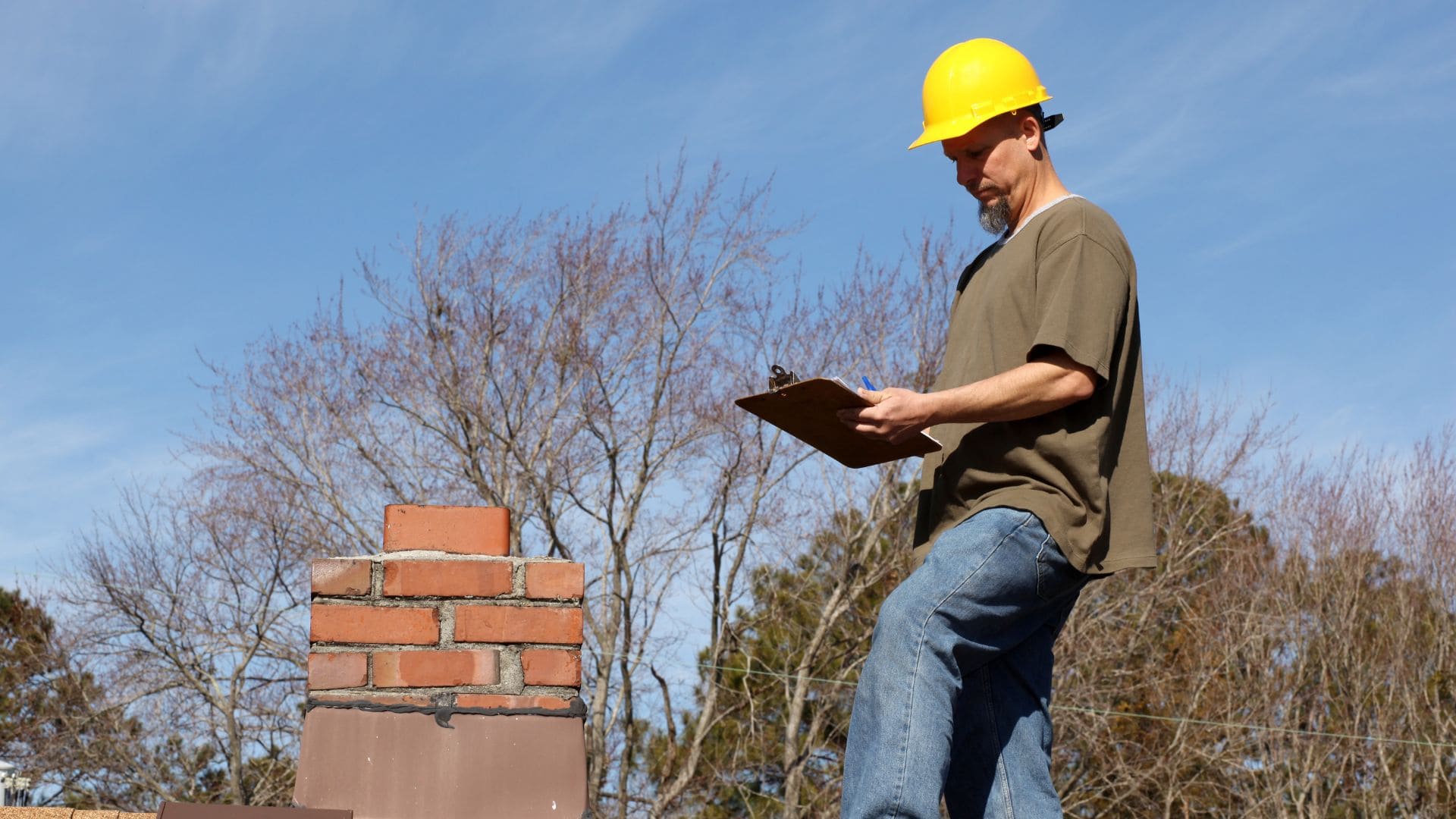
Cracked mortar, spalling bricks, a leaning stack — how does a chimney contractor decide what actually needs to happen? Here's how the evaluation works.
Share:
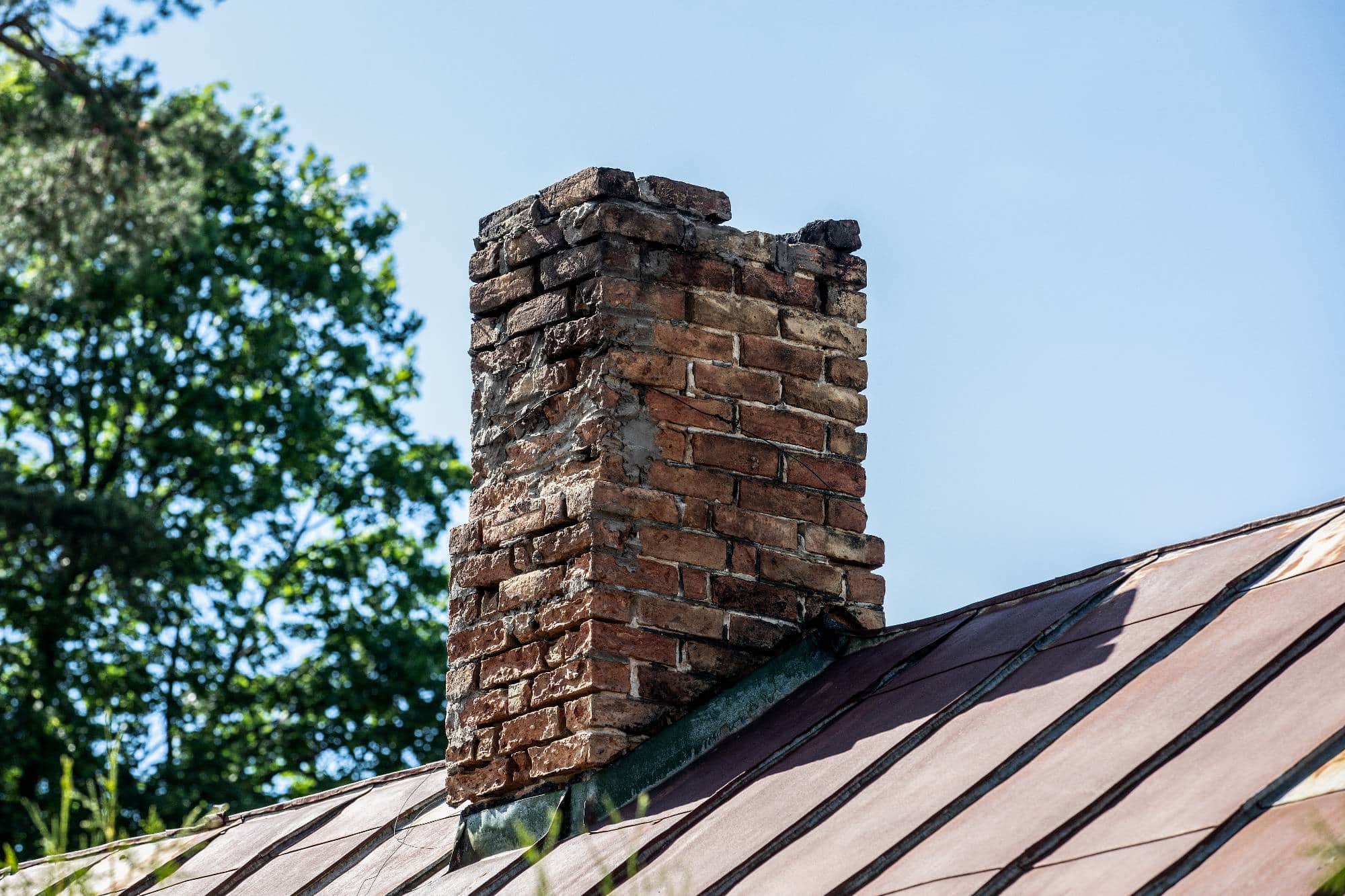
You noticed something. Maybe it’s crumbling mortar between the bricks, a crack that wasn’t there last spring, or water showing up on the ceiling near the fireplace. Maybe you just bought a house in Marshfield or Kingston and the inspector flagged the chimney without explaining what that actually means.
Whatever brought you here, the real question is the same: do you need a repair, or are you looking at a full rebuild? That’s not always a simple answer — but it’s also not a mystery. There’s a process behind it. Here’s how we work through that assessment, and what the findings typically mean for you.
A structural assessment isn’t a quick glance from the driveway. It starts at ground level and works upward — exterior masonry, the roofline, the crown, the flashing, and then the interior of the flue itself. Each part of the chimney tells a different part of the story.
What makes a thorough inspection different from a surface-level one is documentation. When we inspect a chimney, we photograph and video the interior so you can see exactly what we’re looking at. That matters because the most serious problems — a cracked flue liner, deteriorated mortar joints deep inside the stack, early structural separation — aren’t visible from outside. You shouldn’t have to take anyone’s word for it.
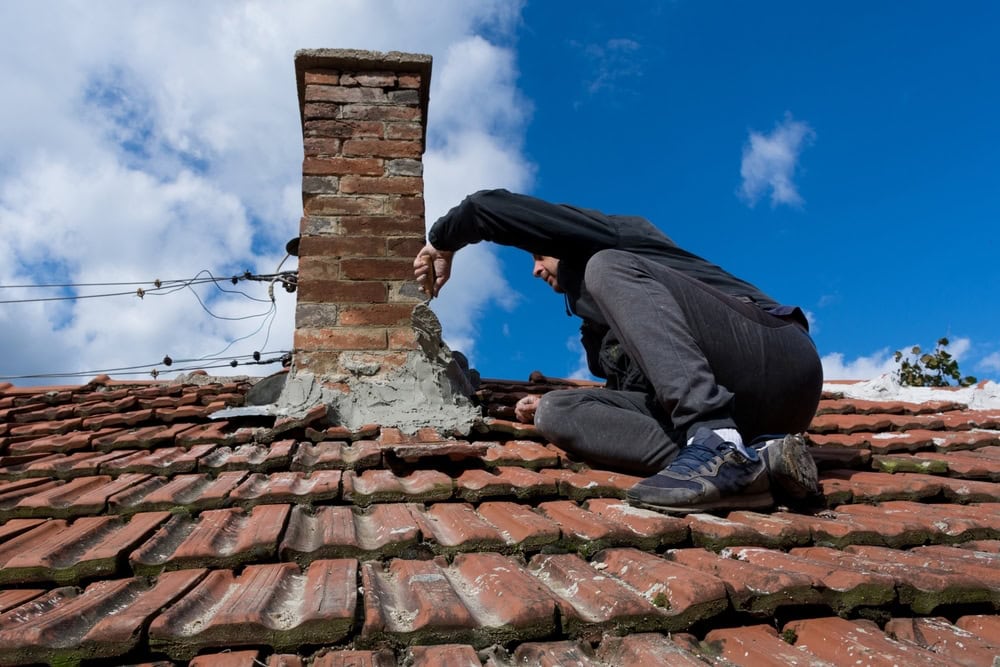
The inspection follows a clear sequence, and each element carries weight in the final recommendation.
On the exterior, we’re looking at the condition of the mortar joints between bricks. Mortar has a lifespan, and in Plymouth County’s climate, it tends to reach the end of that lifespan faster than most homeowners expect. The South Shore sits in a zone where winter temperatures oscillate right around freezing — not consistently below it — which means chimneys here go through roughly 40 to 50 freeze-thaw cycles every winter. Each cycle pushes water deeper into existing cracks, expands them slightly, and repeats. A hairline crack in October can be a quarter-inch gap by March.
We also look for spalling — that’s when the face of a brick flakes or breaks off — and for efflorescence, the white mineral staining that appears when water has been moving through masonry. Both are signs that moisture infiltration is already happening. Neither is cosmetic.
The chimney crown gets close attention too. A properly built crown slopes away from the flue and overhangs the masonry to direct water clear of the bricks. Crowns that are flat, cracked, or poorly constructed funnel water directly into the chimney system. In coastal towns like Scituate, Duxbury, and Plymouth itself, salt air compounds the deterioration — masonry near the water breaks down faster than identical chimneys ten miles inland.
Inside the flue, we’re checking the liner. Clay tile liners crack over time, especially after years of thermal cycling or if a chimney fire has ever occurred. A damaged liner isn’t just a maintenance issue — it’s a carbon monoxide and fire hazard. The liner condition often has as much influence on the repair-versus-rebuild decision as the exterior masonry does.
This is where professional judgment comes in, and it’s also where homeowners are most vulnerable to being steered wrong. Not every problem requires a rebuild. Not every crack means the chimney is coming down. But some damage genuinely has passed the point where patching is the right answer.
Tuckpointing — removing deteriorated mortar and replacing it with fresh material — is the right call when the brick itself is structurally sound and the mortar joints are the primary issue. It’s a relatively modest job, and when done correctly with mortar matched to the original masonry, it adds years to the chimney’s life. If you’re in a home built in the 1960s or 70s in Hanover, Pembroke, or Rockland, there’s a real chance tuckpointing is all your chimney needs.
A partial rebuild becomes the right call when the damage has progressed beyond what repointing can address. If bricks are spalling heavily, if the crown has failed and allowed years of water infiltration, or if the above-roofline section has shifted or shows significant structural cracking, rebuilding that section is more cost-effective than trying to repair it piecemeal. Most rebuilds in this category involve only the portion of the chimney above the roofline — not the entire structure.
A full rebuild is warranted when the damage extends below the roofline, when the chimney has shifted off its foundation, or when the structural integrity of the entire stack is compromised. This is less common, but it does happen — particularly in older Plymouth County homes where original construction didn’t account for modern moisture management standards, or where decades of deferred maintenance have allowed damage to compound.
The honest answer is that the right recommendation depends on what the inspection actually finds. A $400 tuckpointing job today is a better outcome for everyone than a $12,000 rebuild three years from now because early warning signs were ignored.
The chimney services industry has a reputation problem, and it’s earned. There are operators who use free inspections as a sales tool, manufacture urgency, and recommend full rebuilds for problems that could be resolved with a $300 repair. That’s why most homeowners approach this with skepticism, and rightfully so.
What protects you is knowing what to look for in a contractor before anyone sets foot on your roof. Certification, licensing, and documentation practices matter more here than in almost any other home service category — because the work is largely invisible, the stakes are real, and the price range is wide.
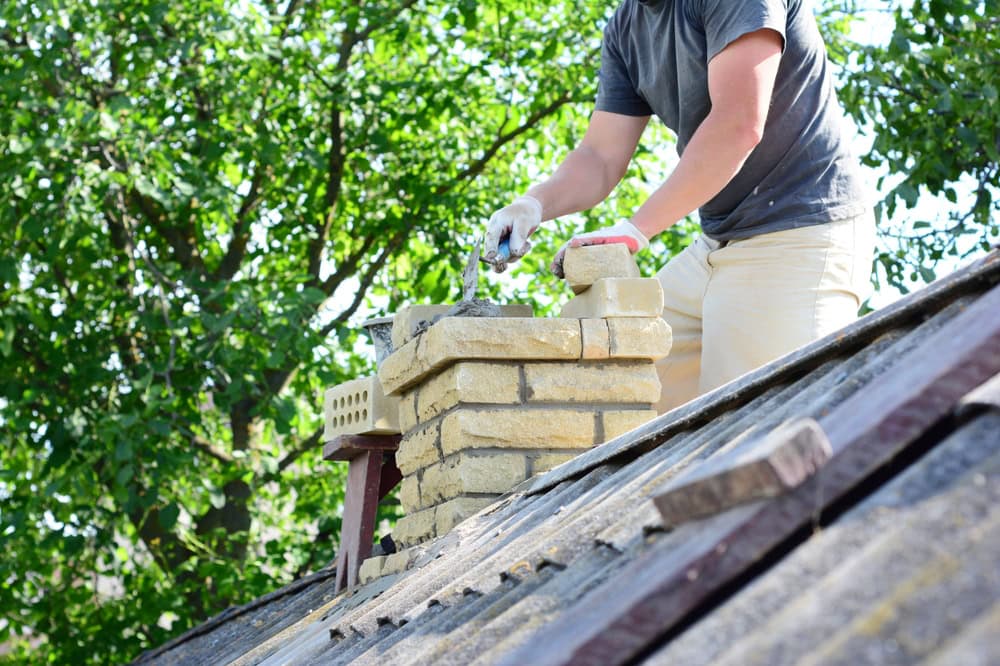
This is one of the most important questions Plymouth County homeowners can ask, and most don’t know the answer until something goes wrong.
Massachusetts does not regulate chimney sweeping at the state level. That means anyone can advertise chimney cleaning or inspection services without a license, without certification, and without any formal training. For basic sweeping, the risk is mostly limited to quality of work. For structural chimney work — repairs, rebuilds, new construction — the picture changes entirely.
Structural chimney work falls under Massachusetts construction licensing requirements. A contractor performing masonry reconstruction needs to hold a Home Improvement Contractor (HIC) Registration for residential work over $1,000, and a Construction Supervisor’s License (CSL) for structural work. If you hire an unlicensed contractor for a chimney rebuild and something goes wrong, you may have limited recourse — and your homeowner’s insurance may not cover the damage.
CSIA certification — from the Chimney Safety Institute of America — is the industry’s primary professional credential. It requires passing a written examination covering chimney systems, construction codes, and safety standards, and it has to be maintained through continuing education. It’s not a guarantee of quality, but it is a meaningful baseline. Membership in the National Chimney Sweep Guild (NCSG) and the Massachusetts Chimney Sweep Guild (MCSG) adds another layer of professional accountability.
When you’re evaluating contractors, ask directly: Are your technicians CSIA certified? Do you hold a Massachusetts HIC registration and a Construction Supervisor’s License for structural work? Can you provide documentation? A reputable contractor will answer those questions without hesitation.
A few questions come up consistently, and they’re worth answering plainly.
Can I use my fireplace if my chimney has visible cracks? It depends on where the cracks are and how significant they are. Cracks in the exterior mortar joints are a maintenance concern but don’t necessarily make the chimney unsafe to use in the short term. Cracks in the flue liner are a different matter — a compromised liner can allow combustion gases, including carbon monoxide, to enter the living space. If you’ve noticed any interior cracking, or if it’s been more than a year since your last inspection, don’t use the fireplace until it’s been assessed.
Does homeowners insurance cover chimney repairs in Massachusetts? Generally, no. Standard homeowners insurance doesn’t cover damage from normal wear and deterioration — which is the cause of most chimney repairs. If a storm, lightning strike, or other covered event caused the damage, there may be a claim to make. But most repair and rebuild costs come out of pocket, which is one more reason to catch problems early. For Plymouth County homeowners, this makes regular inspections a smart investment rather than an expense.
When is the best time to schedule a chimney inspection or repair in Plymouth County? Summer and early fall are genuinely the best window — not just because we’re more available, but because masonry work requires temperatures above 40°F for mortar to cure properly. If you wait until October, you’re competing with every other homeowner who had the same idea. Scheduling in July or August means the work gets done on your timeline, with time to address anything unexpected before heating season starts. Plymouth County’s older housing stock — a significant portion of it built between 1945 and 1975 — means there’s no shortage of chimneys that have been quietly accumulating damage through another South Shore winter.
How long does a chimney rebuild take? A partial rebuild above the roofline typically takes one to two days for a straightforward project. A more complex rebuild or full structural reconstruction takes longer, depending on the scope of work, material availability, and weather. We’ll give you a realistic timeline before work begins — not an optimistic one.
The repair-versus-rebuild question doesn’t have a universal answer. It has an honest one, and arriving at it requires a thorough inspection, clear documentation, and a contractor who’s going to tell you what you actually need rather than what generates the largest invoice.
We’ve been working in Plymouth County and Norfolk County for over 25 years. Our technicians are CSIA certified, our structural work is performed by licensed contractors, and every inspection includes photos and video so you can see the findings yourself.
If you’ve noticed something that doesn’t look right, or if it’s simply been a while since anyone looked at your chimney, we’re a straightforward call or message away. We’ll tell you what’s there — and what, if anything, needs to happen next.
Article details:
Share:
Continue learning: