Building a new chimney involves more decisions than most homeowners expect. Here's a plain-language guide to the process, from foundation to cap.
Share:
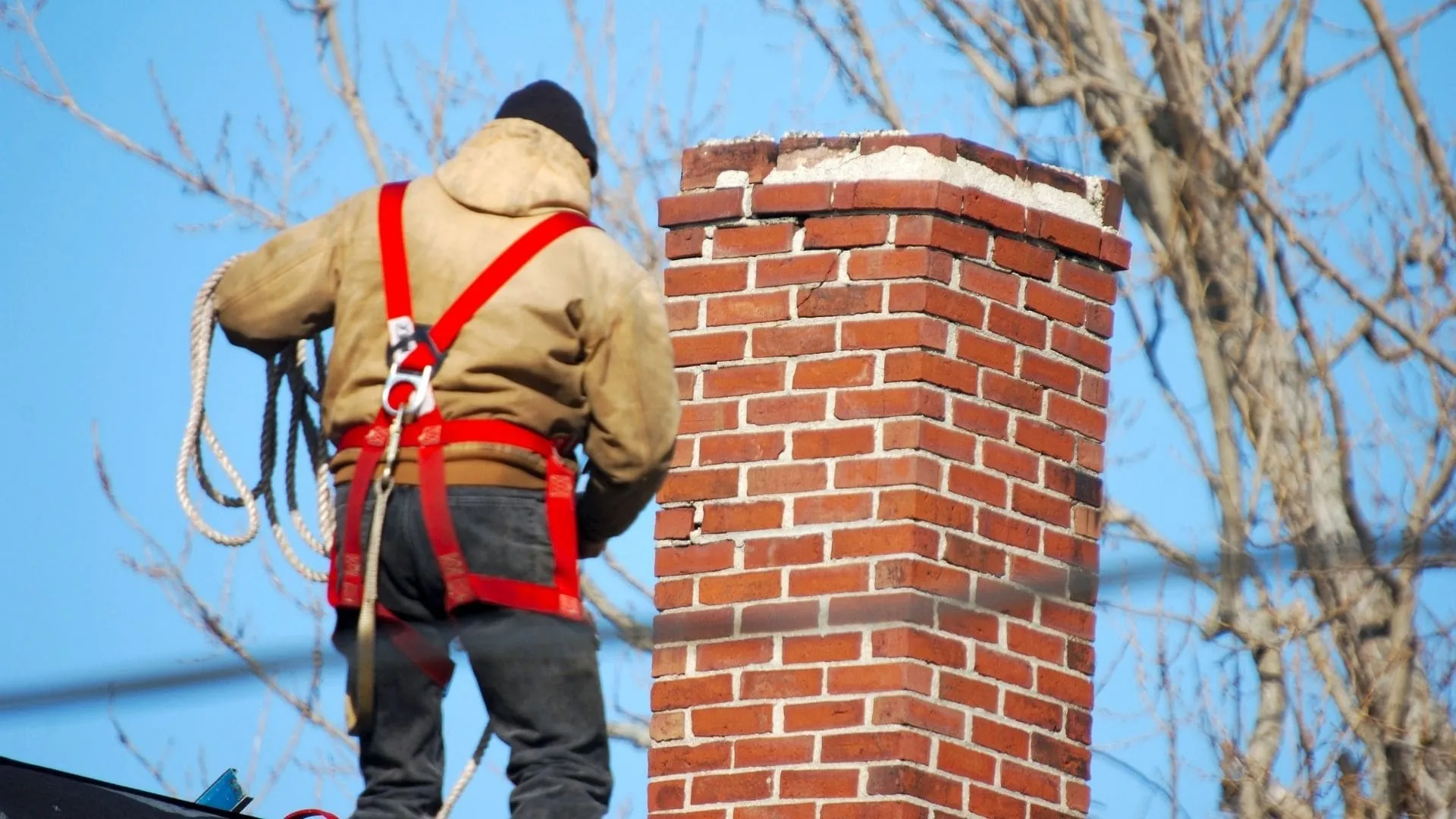
Building a new home in Norfolk County comes with a long list of decisions, and the chimney is one that tends to get underestimated. It looks straightforward from the outside. It isn’t. The foundation has to go in early, the materials have to be right for a New England winter, and the liner choice affects how the whole system performs for decades. Get those things right and you have a chimney that runs cleanly and holds up for generations. Get them wrong and you’re looking at repairs — or a full rebuild — within a few years. This guide covers what the process actually involves, what questions are worth asking, and what good chimney construction looks like in this part of Massachusetts.
Most homeowners picture chimney building as the masonry work you can see — the brick rising above the roofline, the cap sitting on top. That’s the last part of the job. The work that determines whether your chimney actually holds up starts underground, with a footing poured below the frost line.
In Massachusetts, the frost line sits at 48 inches. Any chimney footing that doesn’t go below that depth is going to shift as the ground freezes and thaws each winter. Norfolk County averages 30 to 40 freeze-thaw cycles a year. That’s 30 to 40 opportunities for a shallow foundation to move, crack, and compromise everything built on top of it.
From there, the construction sequence moves through the firebox, smoke chamber, flue, and chimney crown before finishing with the cap and flashing. Each phase has code requirements under NFPA 211 and the Massachusetts State Building Code, and each one affects the performance and safety of the system as a whole.
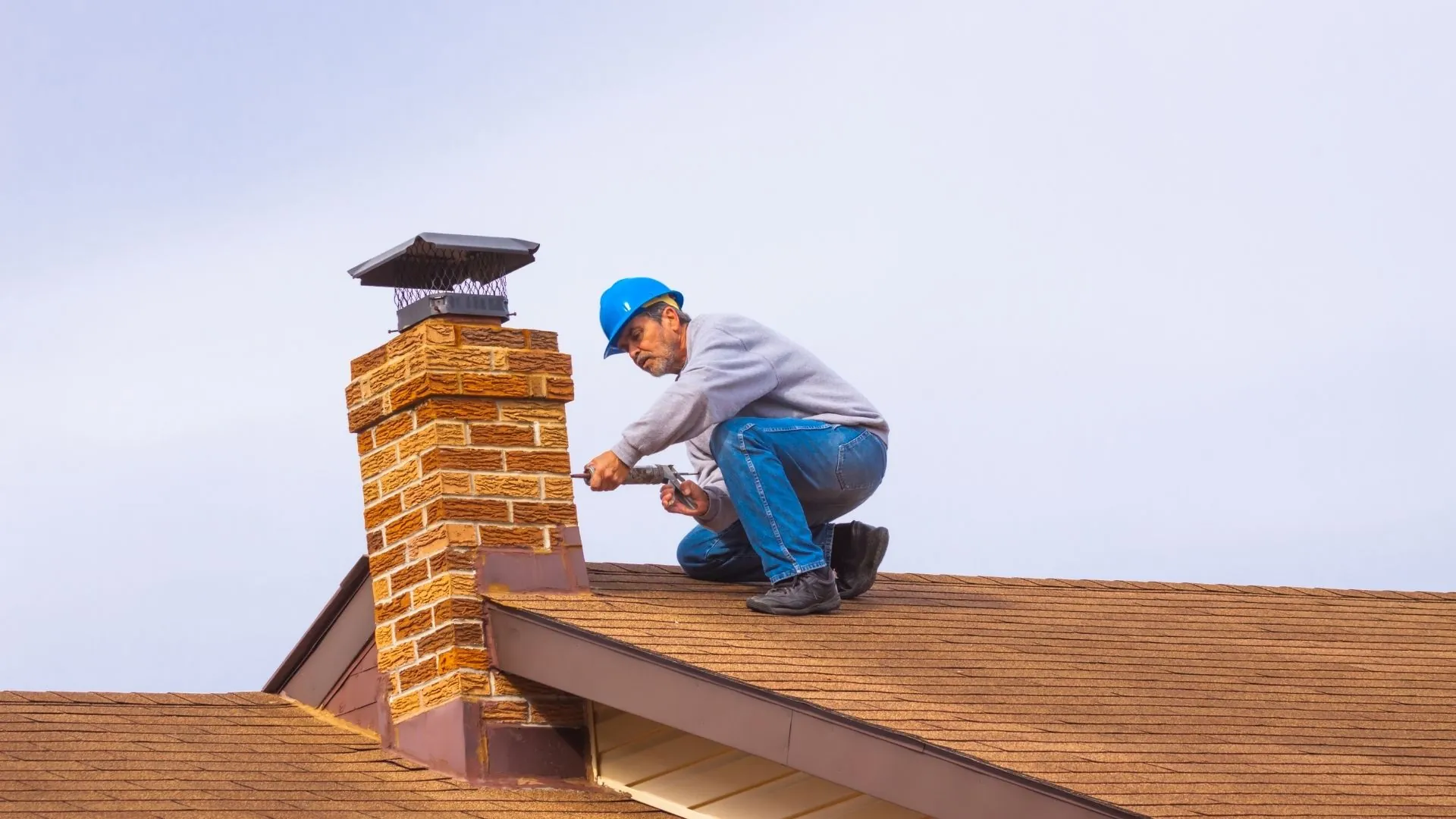
This is one of the first decisions you’ll make, and it’s worth understanding the real difference before anyone talks you in either direction.
A masonry chimney is built on-site from brick, stone, or a combination of both. It’s heavier, takes longer to construct, and costs more upfront — typically somewhere in the range of $4,000 to $15,000 depending on height, materials, and complexity. But it’s also built to last. A properly constructed masonry chimney, with the right materials and the right foundation, can outlast the house it’s attached to. In a market like Norfolk County — where homes in Dedham, Medfield, and Walpole regularly hold values well above the state median — that durability matters.
A prefabricated or factory-built chimney system uses a manufactured metal flue enclosed in a chase, usually framed with wood and finished with siding or a decorative cap. Installation runs $2,500 to $5,000 on average, and it goes up faster. The tradeoff is that prefab systems have a shorter lifespan, require proprietary replacement parts that can be hard to source years later, and don’t carry the same structural or aesthetic weight as masonry. For a custom home, they often feel like a shortcut.
The right answer depends on your budget, your home’s architecture, and how long you’re planning to stay. For most new construction projects in Norfolk County — particularly custom builds in towns like Franklin, Foxborough, or Cohasset — masonry is the better long-term investment. We’ll always give you a straight answer on which makes sense for your specific situation, not just the option that’s easier for us to install.
One thing that applies to both systems: every new chimney needs a properly sized and installed liner. Clay tile, stainless steel, and cast-in-place are the three main options, and the right choice depends on your fuel type, appliance output, and how the chimney is being used. Liner selection isn’t an afterthought — it’s part of the design conversation from day one.
Material selection is where a lot of chimney projects go sideways, especially when the contractor isn’t familiar with what New England winters actually do to masonry.
The freeze-thaw cycle is the main threat. Water gets into small pores and cracks in brick and mortar, freezes, expands, and forces those openings wider. Over time, that process spalls the brick face, erodes mortar joints, and eventually compromises the structural integrity of the chimney. The solution isn’t complicated, but it requires using the right materials from the start.
Hard-fired brick — denser and less porous than standard building brick — holds up significantly better under repeated thermal cycling. For mortar, Type S is the standard for exterior masonry applications in Massachusetts. It’s stronger and more weather-resistant than Type N, which is fine for interior work but breaks down faster when it’s exposed to the elements year after year. In the firebox itself and at the flue joints, refractory mortar is required — standard mortar cannot handle the heat cycling without cracking.
For homeowners in coastal Norfolk County towns like Cohasset, Weymouth, or Quincy, there’s an additional factor: salt air. Salt accelerates brick and mortar deterioration, which is why chimneys in these communities tend to age faster than those a few miles inland. We’ve been based in this part of the South Shore for over 25 years, and we’ve seen firsthand what happens when that variable gets ignored during the build.
Stone chimneys bring a different set of considerations — thermal mass, weight, and the need for careful joint work — but the climate principles are the same. Whatever material you choose, it needs to be selected with the understanding that Norfolk County winters are not gentle.
One of the most common questions we hear from homeowners planning a new build is some version of: “When does the chimney go in, and how long does it take?” The honest answer is that it depends on the scope — but there’s a general sequence that applies to most new construction chimney projects in Norfolk County.
The process starts before any masonry work begins. The foundation footing has to be poured during the early stages of construction, before the house is framed. Trying to add a masonry chimney after the house is built is possible, but it’s significantly more complicated and more expensive. If you’re planning to include a chimney in a new home, that conversation needs to happen early.
Permitting runs parallel to planning. In most Norfolk County towns, residential chimney permits take between 3 and 10 business days to approve once the application is filed. We handle that process — you don’t need to navigate your town’s building department on your own.

The timeline for a new masonry chimney varies based on height, complexity, and weather, but here’s a realistic picture of how the phases stack up.
The foundation and footing work comes first. Once the footing is poured and cured, the firebox and smoke chamber are constructed — this is the most technically demanding phase of the masonry work, because the geometry of the firebox directly affects how well the chimney draws. A firebox that’s the wrong shape or proportion relative to the flue opening will cause smoking problems that no amount of cleaning or repair will fix.
From there, the chimney stack rises to the roofline and beyond. Per NFPA 211 and the International Residential Code, the chimney must extend at least 3 feet above the roof penetration point and at least 2 feet above any part of the roof within 10 feet — commonly called the 2-10-3 rule. Flashing is installed at the roof line to seal the chimney-to-roof junction, which is one of the most common entry points for water if it’s done poorly.
The liner goes in once the masonry is complete, followed by the chimney crown and cap. A final inspection closes out the permit. From footing to final inspection, a straightforward single-flue masonry chimney on a new home typically takes two to four weeks of active work, not counting permit processing time or weather delays. Adding a second flue — for a furnace or a second fireplace — adds cost and time, but it’s a decision worth making during the design phase rather than retrofitting later.
Spring and early summer are the best time for this work in New England. Dry conditions, moderate temperatures, and no heating urgency make for better mortar curing and more predictable scheduling. If you’re planning a fall move-in, starting the chimney conversation in late winter or early spring gives you the most comfortable margin.
A few questions come up consistently, and they’re worth addressing plainly.
Does a new chimney require a permit in Massachusetts? Yes. Building permits are required for new chimney construction throughout Norfolk County, and they’re not optional. A chimney built without a permit creates a liability problem at resale and can trigger a requirement to tear it down and rebuild to code. We pull the permits, manage the process, and make sure the work is inspected and signed off properly.
What certifications should a chimney contractor have? The Chimney Safety Institute of America (CSIA) certification is the most recognized credential in the industry. It requires demonstrated knowledge of chimney construction, applicable codes, and safety standards. Our technicians are CSIA-certified and members of the National Chimney Sweep Guild. These aren’t marketing claims — they’re verifiable credentials that any reputable contractor should be able to confirm before you sign anything.
How much does it cost to build a chimney in Norfolk County? A new masonry chimney typically runs between $4,000 and $15,000, depending on height, materials, and whether you’re adding one flue or multiple. A second flue adds roughly $1,200 to $2,000. Foundation work, depending on soil conditions and whether a new footing needs to be poured, can add another $500 to $2,000. Prefabricated systems start around $2,500 installed. We give written, itemized estimates so you know what you’re paying for before any work begins.
Does a new chimney add value to a home? Generally, yes — particularly a masonry chimney in a market like Norfolk County, where buyers expect quality finishes and long-term durability. A fireplace is consistently ranked among the top features buyers look for in a home, and a well-built masonry chimney signals craftsmanship throughout the rest of the house.
Can I add a chimney to an existing home? Yes, though it’s more involved than building one during new construction. The foundation work is more complex, access is more limited, and costs are typically higher. It’s very doable — we’ve done it throughout Norfolk County, from older Colonials in Dedham to newer builds in Millis — but the planning conversation is even more important when you’re retrofitting.
A chimney built right is one you won’t think about for decades. A chimney built wrong is one you’ll be dealing with every few years — cracked mortar, water coming in, smoke that won’t draw, repairs that keep adding up. The difference usually comes down to who built it and whether they knew what they were doing in this climate, with these materials, under these codes.
We’ve been doing this work on the South Shore and throughout Norfolk County for over 25 years. We know what Massachusetts winters demand from masonry, we know the local permit process, and we know how to build a chimney that performs the way it’s supposed to from the first fire to the fiftieth year.
If you’re planning a new home in Norfolk County — or adding a chimney to an existing one — reach out to Above and Beyond Chimney. We’ll give you a straight answer on what your project involves, what it will cost, and what timeline makes sense. No pressure, no unnecessary upsells, just a clear conversation about what you actually need.
Article details:
Share:
Continue learning: