Old chimney liners fail quietly — until they don't. Here's what Bristol County homeowners need to know before the heating season hits.
Share:
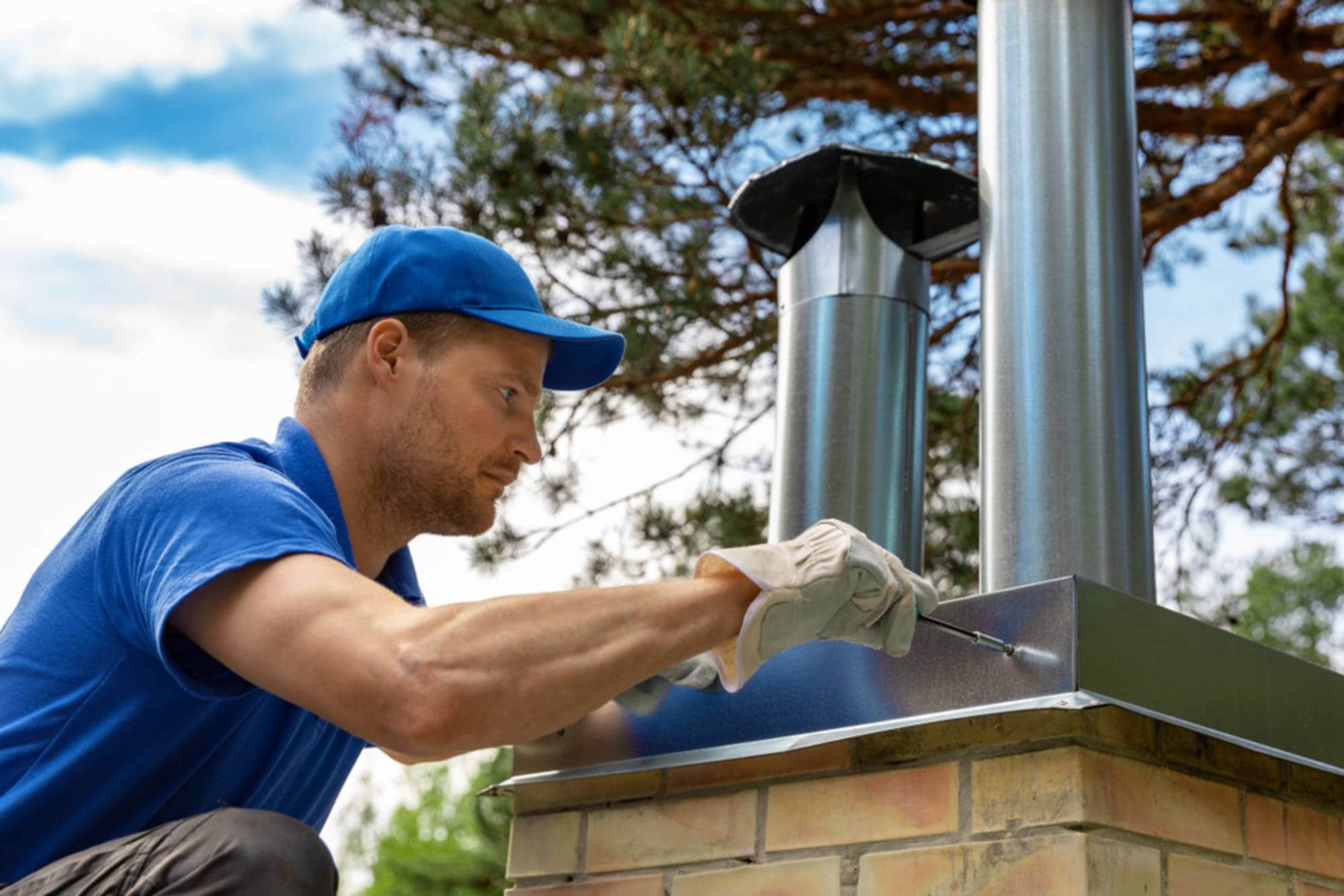
Most homeowners don’t think about their chimney liner until something goes wrong — smoke backing into the living room, a CO alarm going off, or a home inspector flagging it during a sale. By then, the problem has usually been building for years. If your home in Bristol County was built before 1980, there’s a good chance the original clay tile liner inside your chimney is well past its useful life. This page will walk you through what a chimney liner actually does, why it matters more than most people realize, and what a proper installation looks like when it’s done right.
A chimney liner is the interior channel that runs from your firebox or furnace all the way to the top of the chimney. Its job is to contain combustion gases — smoke, carbon monoxide, and heat — and direct them safely out of your home. Without a functioning liner, those gases have nowhere to go except into the surrounding masonry and, eventually, into your living space.
Massachusetts building code requires all masonry chimneys to be lined. That’s not a suggestion. It’s a legal requirement, and it applies whether you have a wood-burning fireplace, a gas furnace, or an oil boiler venting through the chimney. Most people don’t realize the furnace side of this equation at all — but a high-efficiency heating system installed in a home with an old, oversized clay tile liner is a code violation waiting to happen, and a safety risk that runs all winter long.
The majority of homes across Bristol County — in New Bedford, Fall River, Taunton, and Attleboro — were built during the mid-20th century, many even earlier. The mill-era housing stock in New Bedford and Fall River includes homes with original chimneys that are now 80 to 100 years old. Clay tile was the standard liner material for most of that era, and while it holds up reasonably well under ideal conditions, Bristol County doesn’t offer ideal conditions.
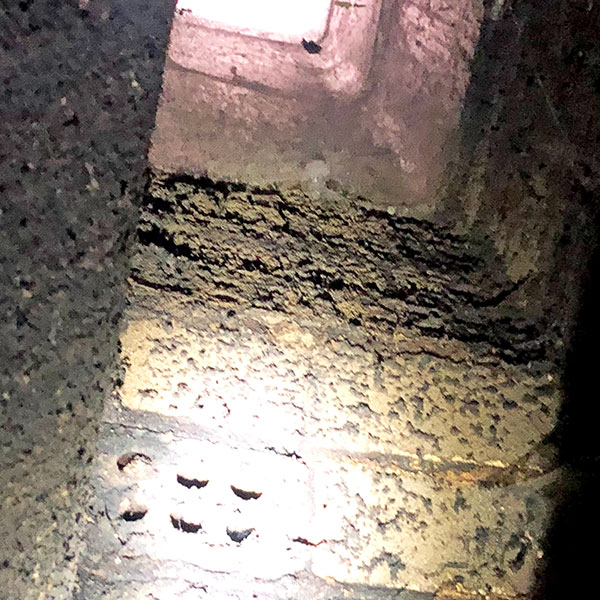
Here’s the problem. Every winter, moisture works its way into hairline cracks in aging clay tiles. When temperatures drop — and in southeastern Massachusetts they drop hard — that moisture freezes, expands, and widens those cracks. Repeat that cycle for 50 winters and you don’t have a hairline crack anymore. You have a structurally compromised liner with gaps large enough to allow combustion gases to migrate into the surrounding masonry and, depending on the construction, into the walls of the home.
The coastal communities in Bristol County make this worse. In Somerset, Swansea, Westport, and along the New Bedford waterfront, salt-laden air from Buzzards Bay and Mount Hope Bay adds another layer of deterioration on top of the freeze-thaw damage. Salt accelerates the breakdown of mortar joints and contributes to the spalling of clay tile surfaces in ways you simply won’t see in an inland market. It’s one of the reasons we specify 316Ti stainless steel for liner installations in this area — it’s the grade with the highest corrosion resistance, and in a coastal environment, that difference is real.
Unlined chimneys allowed adjacent woodwork to catch fire in as little as 3.5 hours during National Bureau of Standards testing. A severely cracked liner creates essentially the same condition.
This is where a lot of homeowners get misled — in both directions. Some contractors recommend full liner replacement when a repair would do the job. Others patch liners that are too far gone to be patched safely. The only honest answer is that you can’t tell without looking inside, and looking inside means a camera.
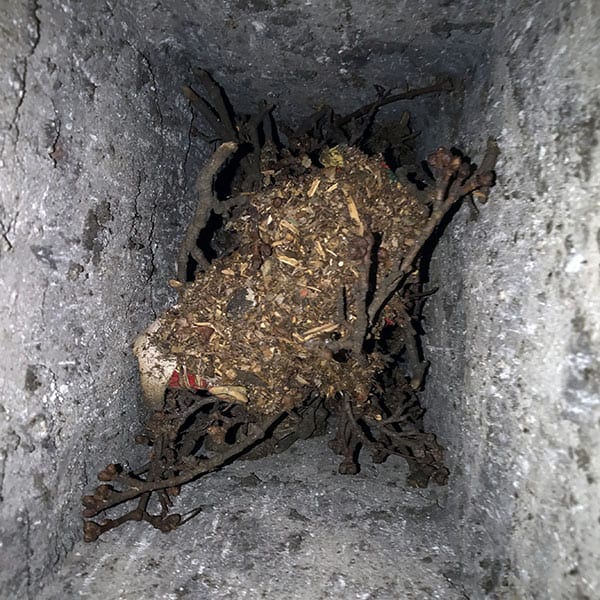
We use closed-circuit cameras to inspect the flue before recommending anything. You see exactly what we see — the condition of the liner surface, any cracks or spalling, whether sections are missing, whether the liner is even the right size for your current appliance. There’s no “trust me, it’s bad.” There’s footage.
When the damage is limited to surface deterioration without structural compromise, a resurfacing system like HeatShield® can restore the liner without a full replacement. Thermocrete works similarly for sealing minor cracks and voids. But when there are structural cracks, missing sections, or a liner that was sized for a different appliance than what’s currently installed, those repair options aren’t appropriate. A new liner is the right call, and trying to patch around it creates a false sense of security that’s more dangerous than doing nothing.
If you’ve recently upgraded your furnace or boiler to a high-efficiency model, that’s a particularly common trigger for Bristol County homeowners. Older clay tile flues are typically sized for the larger exhaust volumes of older, less efficient equipment. A modern high-efficiency appliance produces a lower-temperature, lower-volume exhaust that can condense inside an oversized flue — leading to moisture damage, liner deterioration, and eventually a code violation. A properly sized stainless steel liner solves that problem and keeps the system running the way it was designed to.
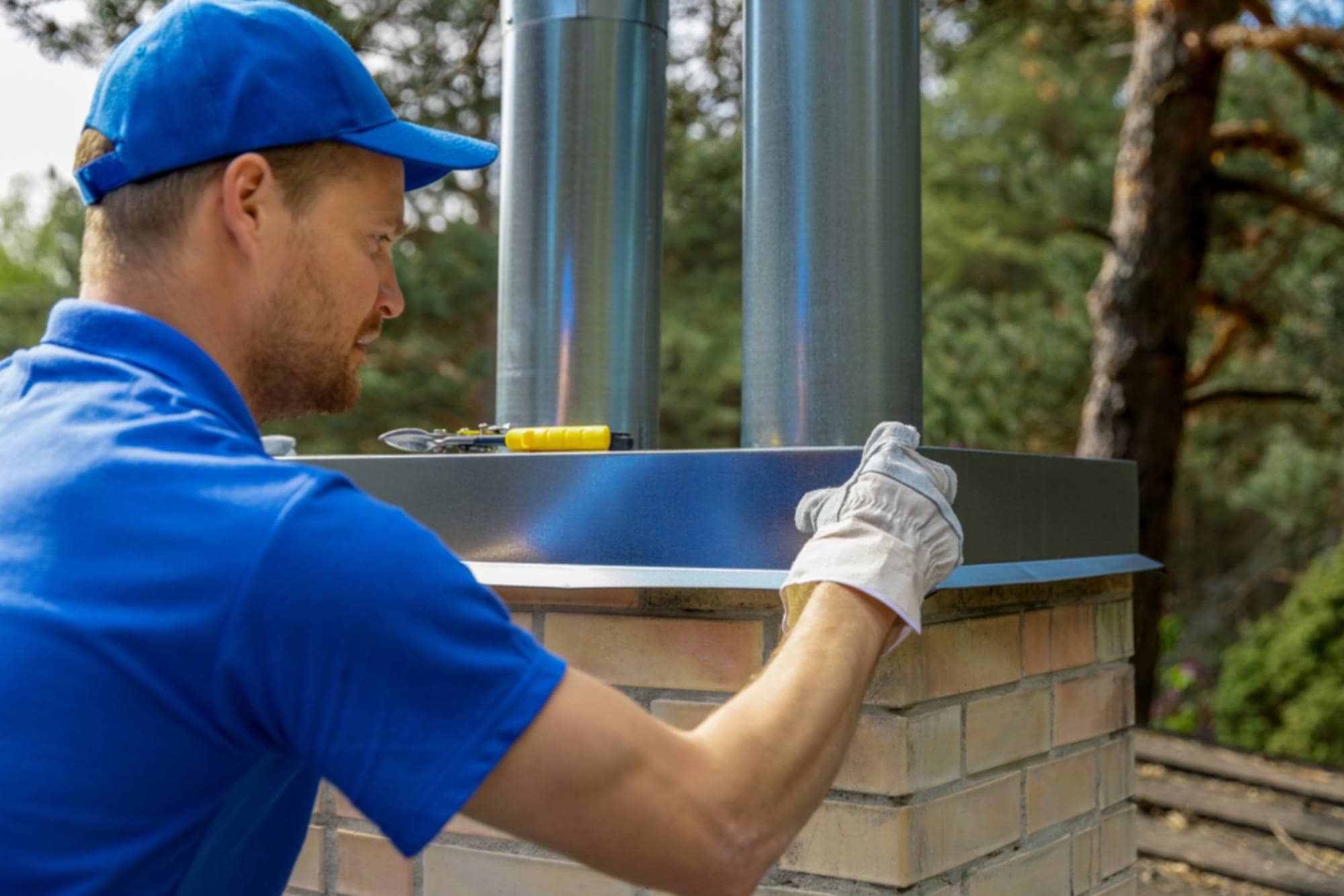
The process starts with the camera inspection described above. Once we know what we’re working with — liner condition, flue dimensions, appliance type, chimney height, and any offsets — we can spec the right liner for the job. For most Bristol County installations, that’s a flexible 316Ti stainless steel liner, UL 1777 listed, sized specifically for the appliance it’s serving.
Installation typically takes a day. The liner is run from the top of the chimney down to the firebox or appliance connection, joints are sealed, and the system is tested for proper draft before we leave. Where code requires it, we add insulation around the liner to improve efficiency and meet Massachusetts building standards. We handle the permit process — most chimney liner installations in Massachusetts require a building permit, and permitted work matters when you sell the home.
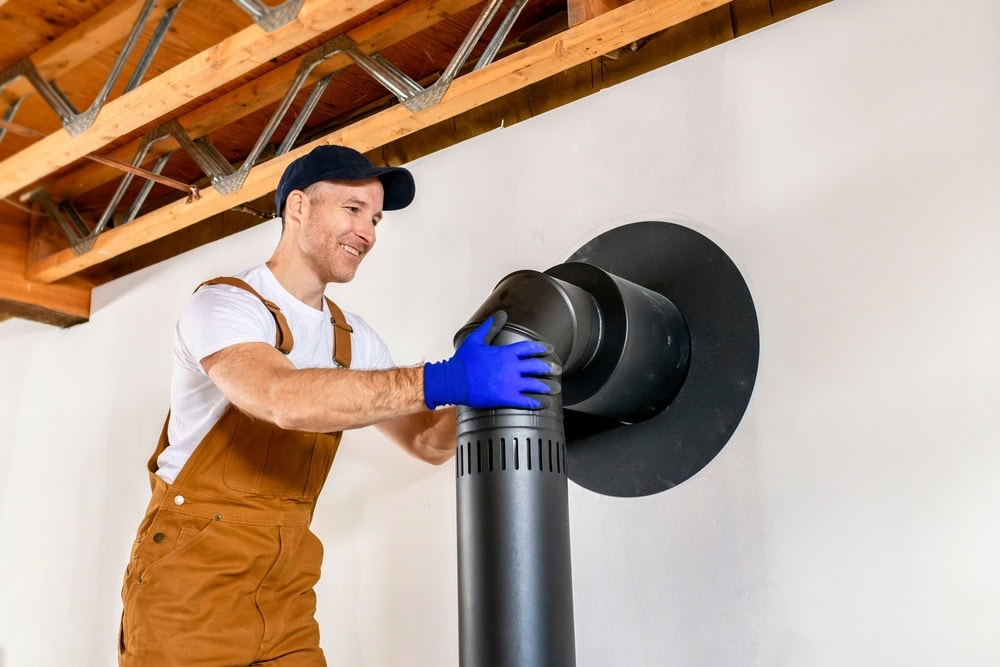
Yes — and for most homeowners, the difference is noticeable right away. Draft is the key variable. A properly sized liner creates the right draw, which means your fireplace pulls air efficiently, burns cleaner, and produces less smoke. An oversized or damaged liner disrupts that draw, which is why smoke backs into the room, why fires are harder to start, and why creosote builds up faster than it should.
Creosote is worth understanding here. It’s the byproduct of incomplete combustion — a tar-like residue that accumulates on the interior of the flue when exhaust gases cool too quickly or when draft is poor. It’s also highly flammable and the primary fuel source for chimney fires. A properly sized liner keeps exhaust temperatures higher and draft stronger, which means less creosote accumulates between cleanings. That’s a real, measurable safety benefit — not just a marketing claim.
For gas and oil furnace systems, the efficiency gains are equally real. A liner sized correctly for the appliance means the furnace isn’t fighting a venting system that’s working against it. Combustion gases exit cleanly and completely. The system runs the way the manufacturer intended. Over a full heating season in a Bristol County home, that adds up.
A properly installed and maintained stainless steel liner lasts 15 to 25 years. Compare that to a clay tile liner in a coastal New England environment that may have been deteriorating for decades, and the upgrade case becomes straightforward. You’re not just fixing a problem — you’re installing a system that will outlast the next two or three heating system replacements.
This comes up more than most homeowners expect. In Bristol County’s real estate market — whether you’re in Rehoboth, Mansfield, Dartmouth, or closer to the Fall River and New Bedford urban core — home inspectors routinely flag chimney liner issues during purchase inspections. Buyers’ attorneys and mortgage lenders have become increasingly attentive to chimney compliance, and an unpermitted or non-compliant liner installation can stall or kill a closing.
If you’re planning to sell in the next few years, a documented, permitted liner installation is a straightforward way to remove a common inspection flag before it becomes a negotiating point. If you’re buying and the inspection report mentions the liner, it’s worth understanding exactly what that means before you close — not after.
The permit piece is important in both scenarios. A liner that was installed without a permit has no official record of inspection, no documented compliance with NFPA 211, and no guarantee that the work was done to code. If something goes wrong — a chimney fire, a CO incident, a moisture intrusion — an unpermitted installation can create serious complications with your homeowner’s insurance. We pull permits on every installation, handle the scheduling with the local building department, and make sure the documentation is in order. That’s how the job is supposed to be done.
For homeowners who’ve been putting off a liner inspection because the house seems fine, the real estate angle is often the thing that finally moves the needle. You don’t have to be selling tomorrow for this to matter. But knowing that a compliant, documented liner installation protects your home’s value — on top of protecting the people living in it — tends to make the decision easier.
If your home is more than 30 years old, you haven’t had a chimney inspection recently, or you’ve noticed any smoke backup, unusual smells, or a spike in heating costs, a liner inspection is the right starting point. Not a quote — an inspection. The camera goes in, you see what’s actually there, and then you have real information to make a decision with.
We’ve been doing this work across Bristol County for over 25 years. That includes historic homes in New Bedford and Fall River, coastal properties in Westport and Swansea, and newer construction in Attleboro, Mansfield, and Raynham. Our technicians are CSIA-certified, we carry a BBB A+ rating, and we use materials — Ventinox, 316Ti stainless steel, UL-listed systems — that are built to last in this climate specifically.
If you’re ready to schedule an inspection or get a straight answer about what your chimney actually needs, reach out to us at 781-297-7890. A free estimate is a phone call or text away.
Article details:
Share:
Continue learning: