From freeze-thaw damage to crumbling mortar joints, Plymouth County chimneys take a beating. Here's what to watch for — and when to act.
Share:
Most chimney problems don’t announce themselves. There’s no alarm, no obvious collapse — just a hairline crack in the crown, some mortar quietly turning to sand, or a little water finding its way in after a nor’easter. By the time you notice something’s wrong, the damage has usually been building for a season or two.
If you own a home in Plymouth County, MA — whether it’s a 1960s colonial in Hanover, a historic cape in Duxbury, or a coastal property in Scituate — your chimney is up against conditions that accelerate wear faster than most homeowners realize. Here’s what we see most often, and what it means for your home.
The short answer is freeze-thaw cycles and coastal exposure — two things Plymouth County has in abundance. From November through March, temperatures here regularly swing above and below freezing, sometimes within the same week. Every time that happens, any moisture that’s worked its way into your masonry expands as it freezes, then contracts as it thaws. Do that enough times and even solid brick starts to lose the battle.
Add salt air into the mix — which is a real factor for homes in Marshfield, Plymouth, Cohasset, Hull, and anywhere else along the coast — and mortar joints that might last 40 years inland start breaking down in 20. That’s simply what the environment does to masonry over time.
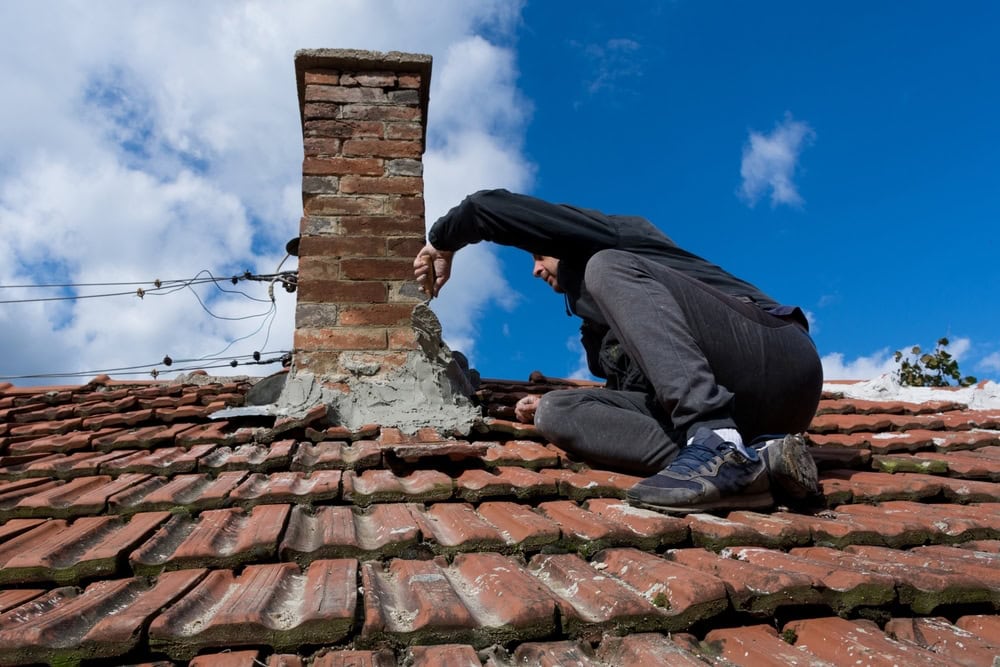
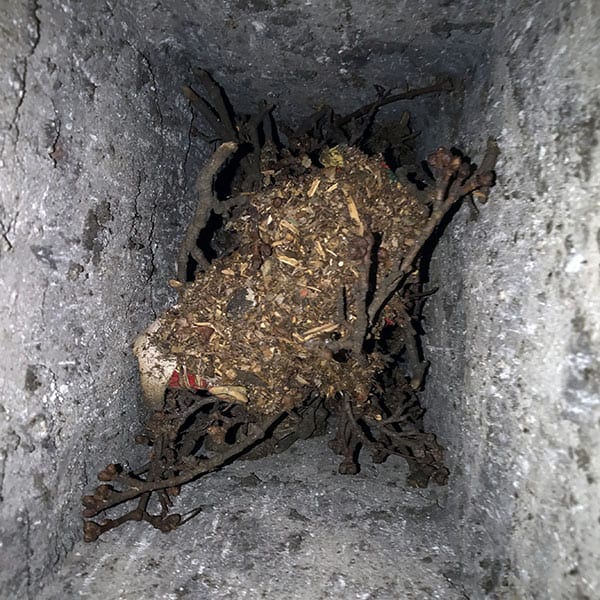
The crown is the concrete or mortar slab that seals the top of your chimney. It’s not decorative — it’s the first line of defense against water getting into the system. When it cracks, and it will crack eventually, water doesn’t just sit there. It funnels directly down into the chimney, saturating the masonry, soaking the flue liner, and working its way toward your firebox and interior walls.
What makes crown damage particularly frustrating is how easy it is to miss. From the ground, a cracked crown can look completely intact. You’d need to be up on the roof — or have a technician with the right equipment — to see what’s actually happening. By the time water stains appear on your ceiling or walls near the fireplace, the crown has usually been compromised for at least one full winter season.
Small hairline cracks can often be sealed with an elastomeric coating, which is a relatively straightforward repair. But if the crown has shifted, broken apart, or was poorly built to begin with — meaning it doesn’t have a proper overhang or drip edge — a full replacement is the right call. A rebuilt crown, done correctly, should last decades. A patched-over bad crown is just postponing the same conversation.
In Plymouth County, we see accelerated crown cracking in coastal communities where wind-driven rain hits the chimney at an angle, and in older homes where the original crown was built with a mortar mix that wasn’t designed to handle sustained freeze-thaw stress. If your home was built before 1990 and the crown has never been inspected, it’s worth a look before next fall.
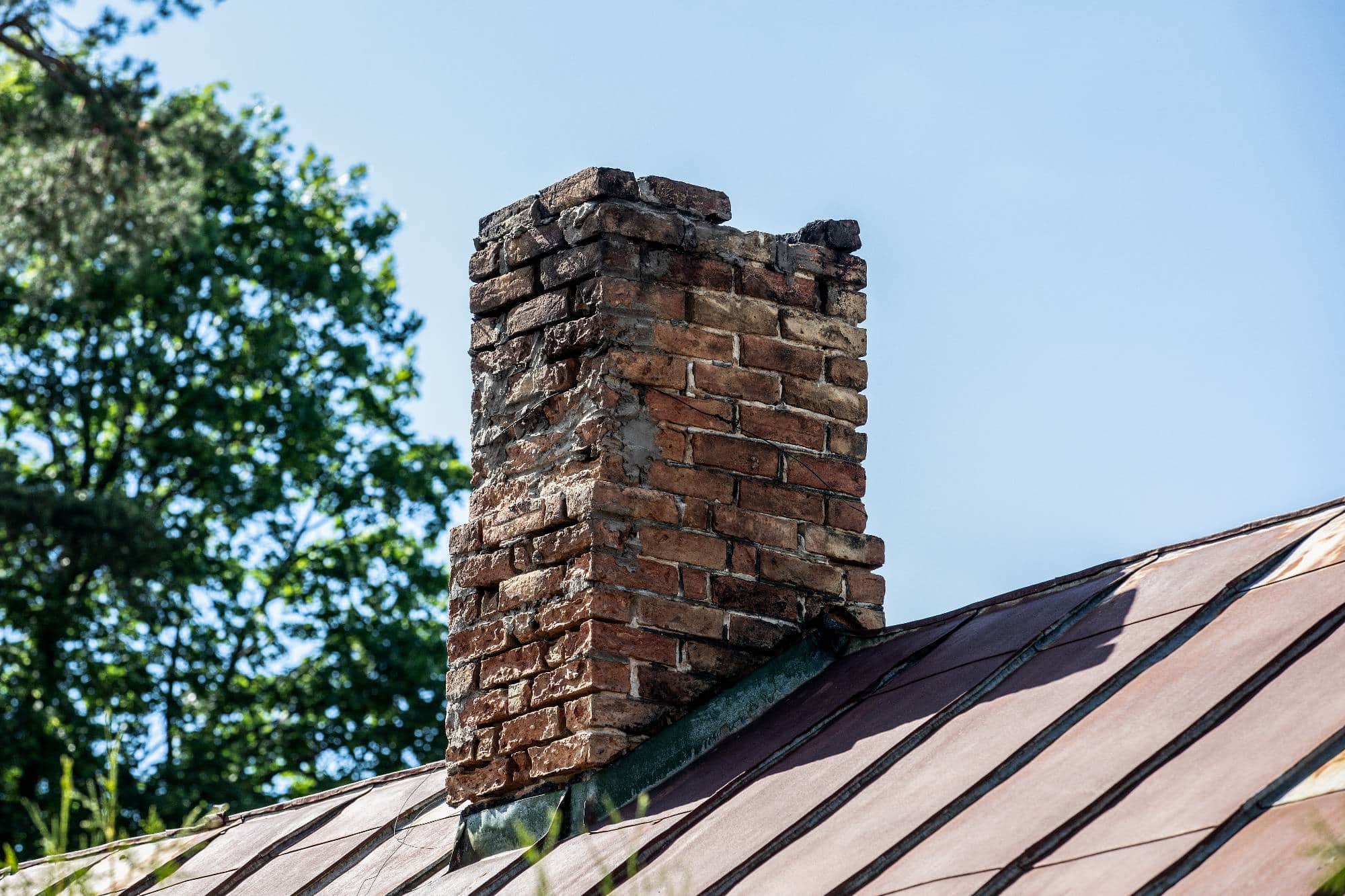
Mortar joints — the material between the bricks — have a lifespan. Most start showing meaningful deterioration somewhere between 25 and 30 years of exposure to New England weather. That puts a significant portion of Plymouth County’s housing stock, especially the ranch homes and colonials built along the Route 3 corridor in the 1960s and 70s, squarely in the window where mortar repair becomes necessary.
What you’re looking for is mortar that looks recessed, crumbly, or has gaps where it used to be solid. Sometimes you can see it clearly from the ground. Other times it’s more subtle — the surface looks okay, but the mortar has softened behind the face and is no longer doing its job structurally. Either way, deteriorating mortar joints are an open invitation for water to enter the chimney system.
The repair process is called tuckpointing. It involves carefully removing the damaged mortar to a specific depth, then packing in fresh mortar that matches the original in composition, color, and texture. That last part matters more than most people realize. Using a mortar that’s too hard for older brick — a common mistake — can actually cause the surrounding bricks to crack, because the mortar becomes stronger than the brick itself and transfers stress the wrong way. Getting the mix right requires knowing what you’re working with, which is why tuckpointing isn’t the same as general masonry work.
For homes in Plymouth’s historic district, in older parts of Duxbury, or anywhere you’re dealing with pre-1900 construction, this becomes even more critical. Traditional lime-based mortars behave differently than modern Portland cement mixes, and using the wrong product on a historic chimney can do real damage to the brick — and potentially affect your home’s historic designation. We’ve done restoration work on chimneys throughout Plymouth County where the goal wasn’t just structural repair but preserving the original character of the masonry. That requires a different approach, and not every chimney company offers it.
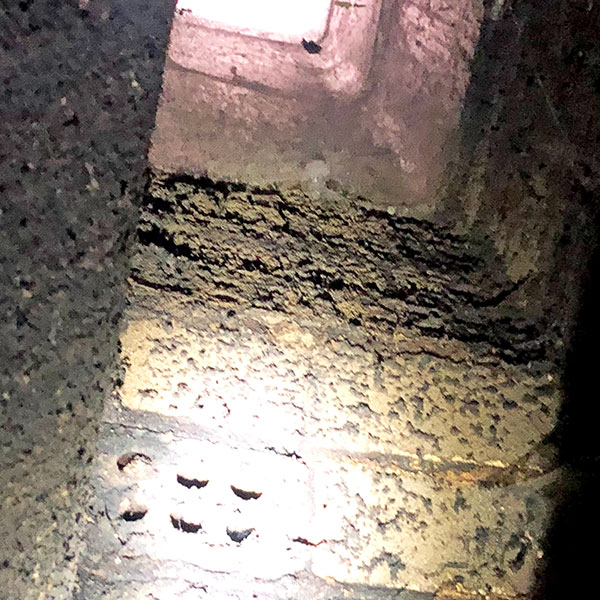
If there’s one theme running through almost every chimney repair issue, it’s water. Cracked crowns let it in from the top. Failed flashing lets it in where the chimney meets the roof. Deteriorated mortar joints let it seep through the sides. Once water is inside the chimney system, it doesn’t stay contained — it migrates into surrounding framing, insulation, and interior walls.
The tricky part is that chimney water damage often looks like something else entirely. A stain on the ceiling near the fireplace gets blamed on the roof. A musty smell in the living room gets written off as a humidity issue. Peeling wallpaper near the chimney breast gets ignored. By the time the source is traced back to the chimney, there’s usually more work involved than there would have been if it had been caught earlier.
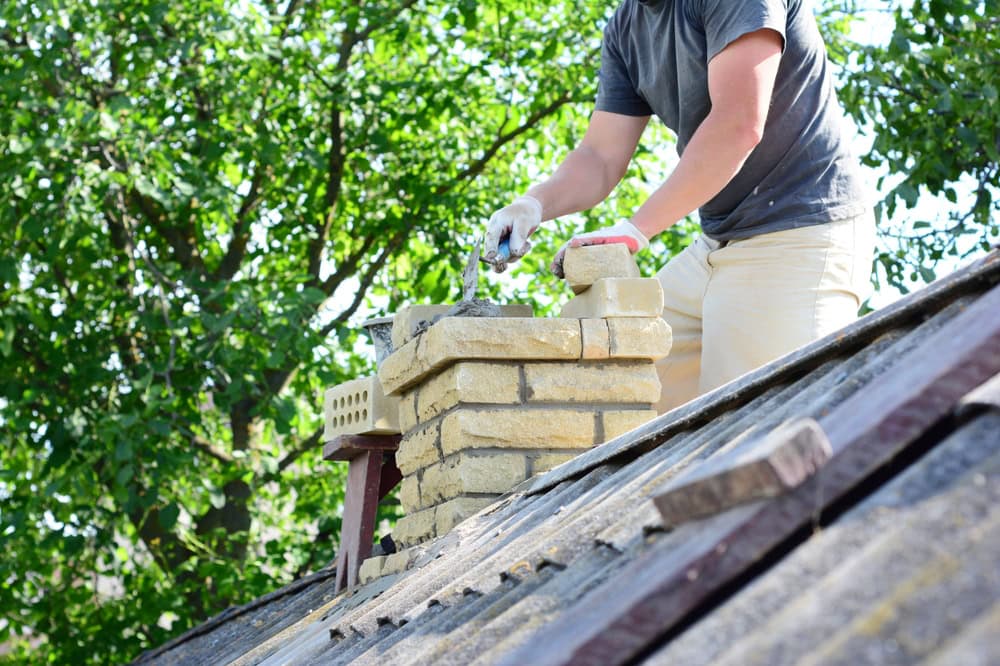
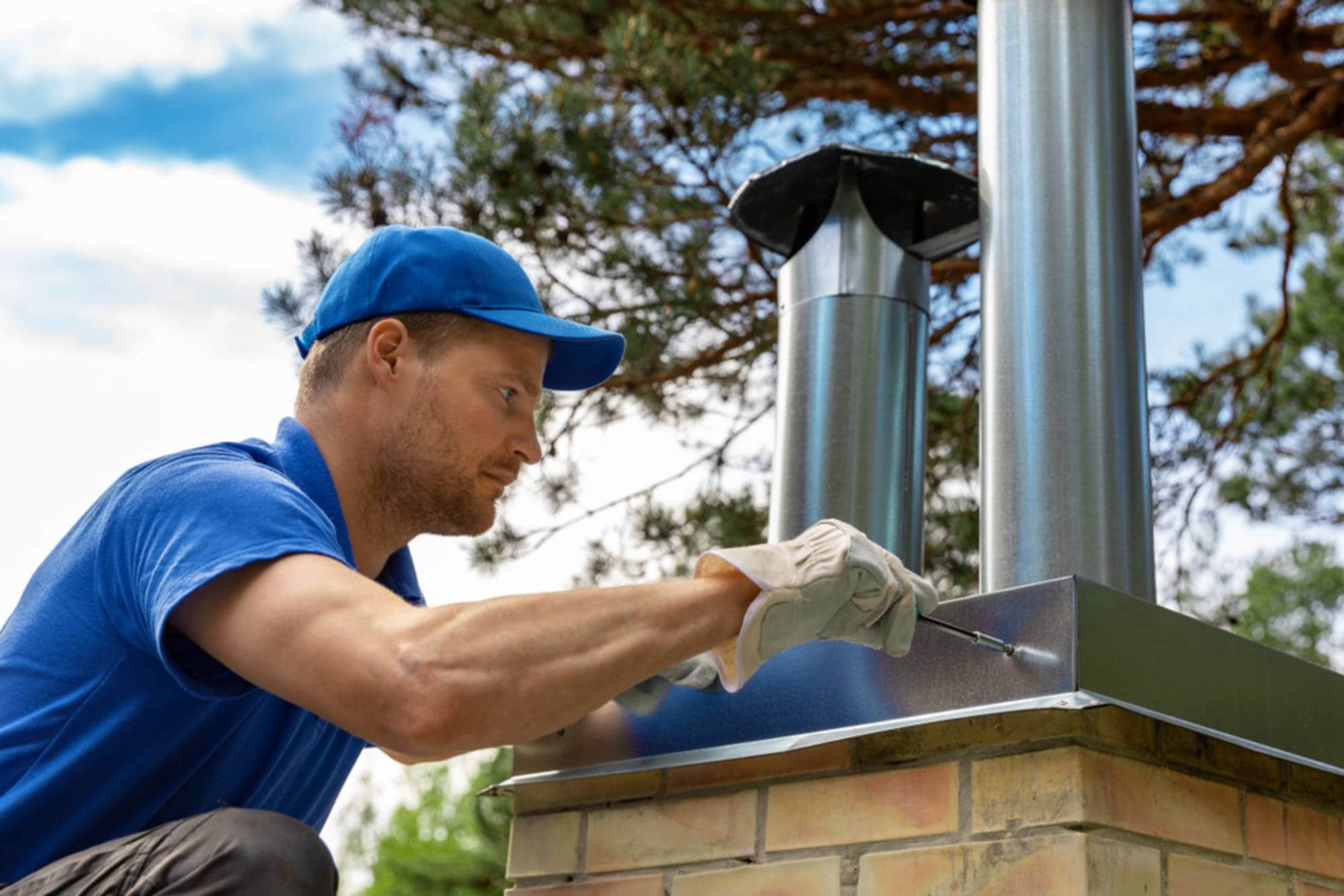
Flashing is the metal seal — typically aluminum or lead — that runs along the base of the chimney where it penetrates the roofline. Its job is to create a watertight transition between the chimney and the roof. When it fails, water runs straight down the chimney’s exterior and into the roof deck, often appearing as a ceiling stain or wet attic insulation near the chimney.
Flashing fails for a few reasons. It can pull away from the chimney as the structure shifts slightly over time. The sealant used to bond it to the masonry can dry out and crack, especially after repeated freeze-thaw cycles. In some cases, it was installed incorrectly to begin with — a single-layer step flashing without counter flashing, for example, which is a shortcut that doesn’t hold up over time in a climate like ours.
Plymouth County homes built in the 1950s through 1980s often have original flashing that has never been replaced. At 40 to 70 years old, even well-installed flashing is past its reliable service life. We see this frequently in towns like Pembroke, Hanover, and Kingston — homes that have been well maintained overall, but where the chimney flashing was simply never on the radar until a leak showed up.
The repair isn’t always a full replacement. Sometimes re-sealing and securing existing flashing is enough if the metal itself is still sound. But if the flashing has corroded, pulled away significantly, or was undersized for the chimney, replacement is the more durable solution. The key is diagnosing it correctly rather than re-sealing over a problem that’s going to reappear in two years.
It’s a fair question, and one we hear often — especially from homeowners who’ve had a bad experience with a company that seemed to recommend everything under the sun. The honest answer is that chimney waterproofing works well when it’s the right product applied at the right time, and it’s not the right answer for every situation.
The product that matters here is a vapor-permeable waterproofer — meaning it blocks water from entering the masonry from outside while still allowing moisture that’s already inside the brick and mortar to escape. If you seal a chimney with standard paint or a non-permeable product, you trap moisture inside, which accelerates the exact freeze-thaw damage you were trying to prevent. That’s a real problem, and it’s why product selection and application technique matter as much as the decision to waterproof at all.
When it is the right call — on a chimney with sound masonry that’s showing early signs of water absorption, or as a protective measure after tuckpointing — waterproofing can meaningfully extend the life of the structure. For coastal Plymouth County properties in Scituate, Marshfield, or along the Plymouth waterfront, where chimneys are exposed to salt air and ocean-driven moisture on top of normal weathering, it’s often a smart investment rather than an optional add-on.
What it won’t do is fix existing damage. Waterproofing is a protective measure, not a repair. If your mortar is already deteriorating or your crown is cracked, those issues need to be addressed first. Applying a waterproofer over damaged masonry just seals in the problem. The right sequence is: repair what’s broken, then protect what’s sound.
The CSIA recommends a chimney inspection every year for any chimney that’s in use — and honestly, that guidance exists for good reason. Most of the damage described on this page develops gradually and quietly. An annual inspection catches it while it’s still a manageable repair rather than a structural project.
Spring and summer are actually the best time to address chimney repairs, not fall. Mortar cures properly in warm, dry conditions, and any work done now is fully set before the first fire of the season. Waiting until October means competing with every other homeowner who had the same idea, and it means another winter’s worth of freeze-thaw cycles working on whatever damage is already there.
If you’re in Plymouth County — whether you’re in Duxbury, Rockland, Wareham, or anywhere in between — and you’re not sure what condition your chimney is in, we can tell you exactly what’s going on and what, if anything, needs to be done about it. Our CSIA-certified technicians have been working on South Shore homes for decades and can provide a clear assessment of your chimney’s condition.
Article details:
Share:
Continue learning: