Find out what a chimney flue inspection actually covers, why Norfolk County homes are especially vulnerable, and when you genuinely need one.
Share:
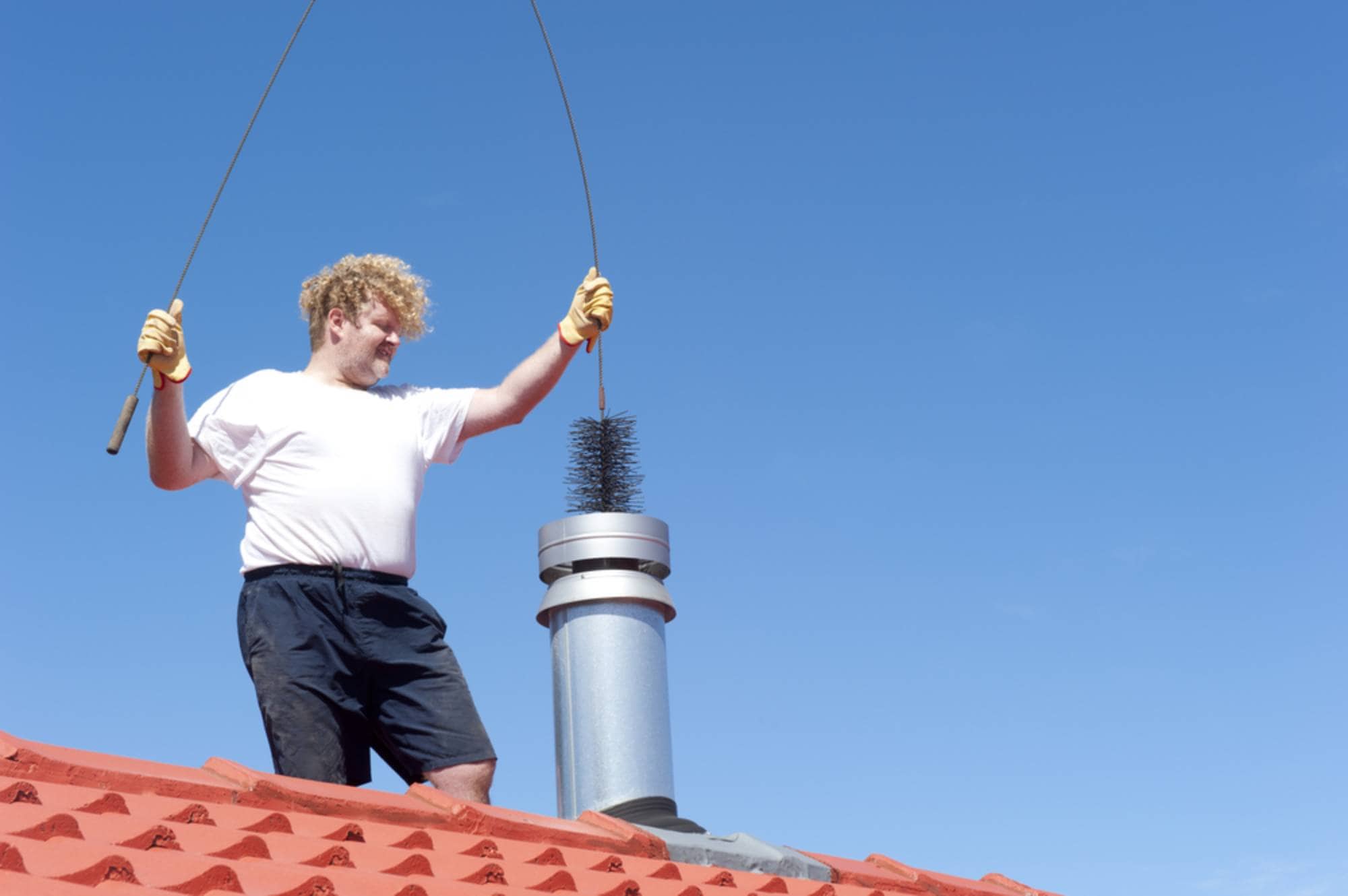
Your HVAC technician just finished the estimate for your new furnace — and then mentioned, almost as an aside, that you’ll need a chimney inspection before the install can move forward. Now you’re searching for what that actually means, how serious it might be, and whether this is going to turn into a bigger problem.
You’re not alone. That exact scenario plays out across Norfolk County every year, especially as more homes make the switch from oil to gas heat. This page explains what a chimney flue inspection covers, why the liner gets so much attention, and how to know whether what you’re dealing with is a minor maintenance item or something that genuinely needs to be addressed.
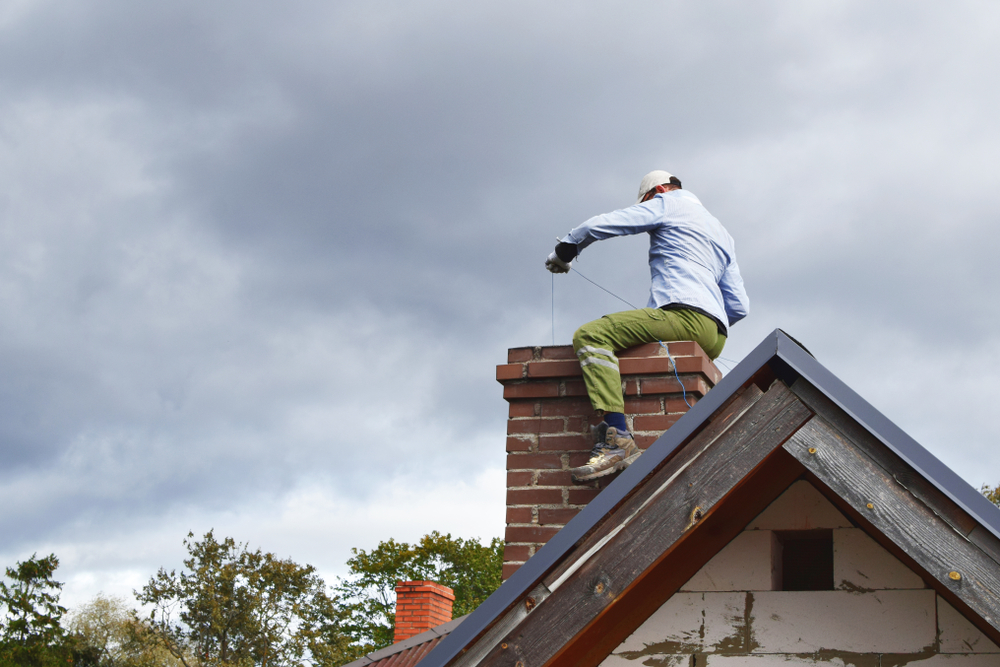
The flue is the interior channel running through your chimney — the pathway that carries combustion gases, smoke, and moisture out of your home. A chimney flue inspection is a systematic examination of that channel and the components surrounding it: the liner, the firebox, the damper, the smoke chamber, the chimney crown, the cap, and the exterior masonry.
What we’re looking for depends on the inspection level, but the core question is always the same — is this system moving gases safely out of your home, and is the structure containing it intact? Cracks in the liner, gaps in the mortar, a deteriorated crown, or a blocked flue opening can all compromise that function in ways that aren’t visible from your living room.
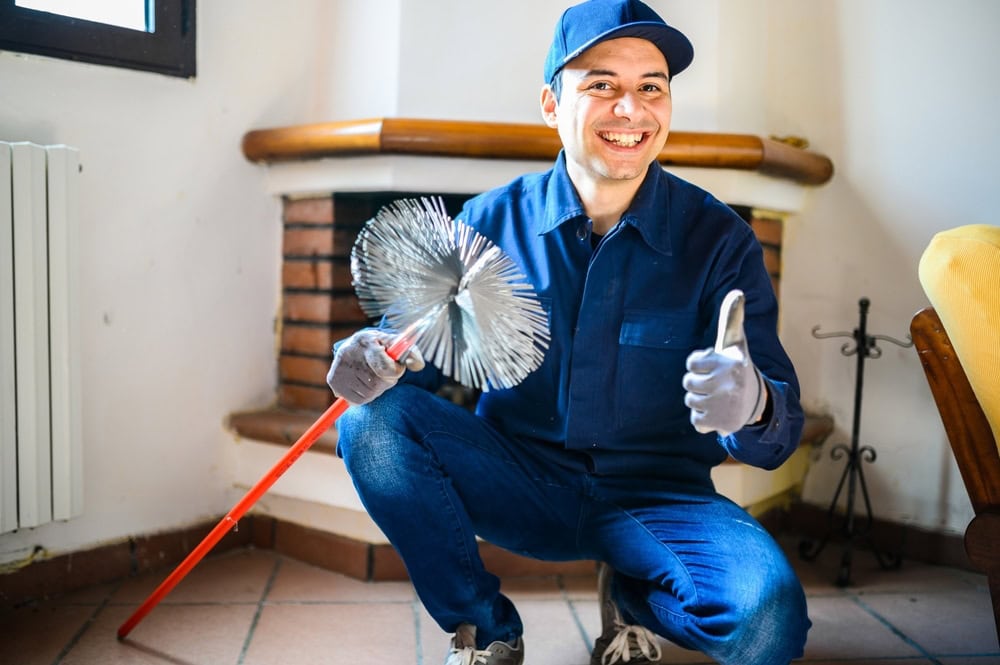
NFPA 211 — the national standard that governs chimney inspection requirements — defines three levels of inspection, and the distinction between Level 1 and Level 2 is the one most homeowners need to understand.
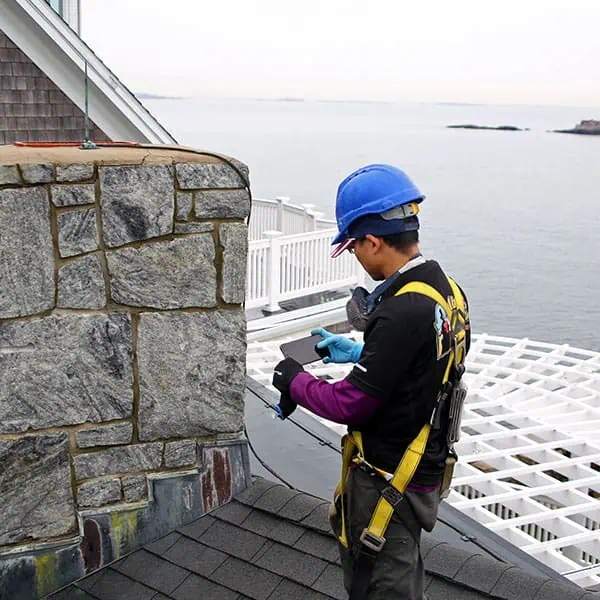
A Level 1 inspection is a visual survey of the accessible portions of the chimney: the exterior, the interior, and the connection to the appliance. We’re checking for obvious structural problems, visible obstructions, and signs of deterioration we can see with the naked eye. It’s the baseline — appropriate for a chimney that’s been regularly serviced, hasn’t changed appliances, and hasn’t experienced anything unusual.
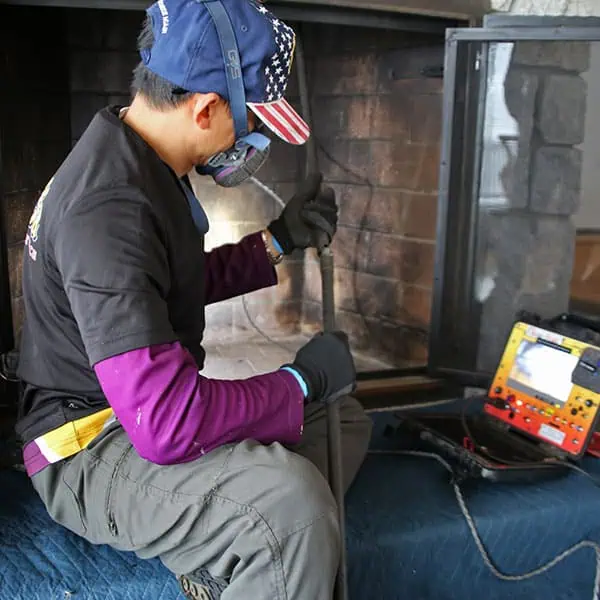
A Level 2 inspection goes further. It includes everything in a Level 1, plus a video camera scan of the flue interior. That camera is what makes the difference. Many of the most significant problems inside a chimney flue — cracked liner tiles, missing mortar joints, gaps between sections — are completely invisible from the fireplace opening or the roofline. The camera lets us see exactly what’s happening inside the flue and document it with photos.
We require a Level 2 inspection any time there’s been a change to the system — a new appliance, a fuel conversion, or a home sale. It’s also what most home inspectors mean when they write “chimney needs further evaluation” in a report. That phrasing isn’t a red flag by itself; it’s a standard notation that a general home inspector isn’t qualified to assess the flue, and a specialist needs to take a closer look. A Level 2 is the appropriate response.
Level 3 inspections are reserved for situations where serious internal damage is suspected — they involve opening up portions of the chimney structure and are relatively uncommon.
This is the part most homeowners don’t hear about until they’re already mid-project. When a home switches from oil heat to natural gas, the chimney doesn’t automatically carry over. Gas appliances produce flue gases that are fundamentally different from what an oil burner generates — cooler, more acidic, and significantly more moisture-laden. Clay tile liners, which are standard in the vast majority of Norfolk County homes built before the 1990s, were designed for the drier, hotter exhaust of oil combustion. Under gas, that same clay liner deteriorates at an accelerated rate.
The Massachusetts Mechanical Code is specific on this point: the flue liner must be continuous and free of cracks, gaps, perforations, or other damage that would allow combustion products — including gases, moisture, and creosote — to escape into the surrounding structure. When you convert to gas, the existing liner needs to be evaluated against that standard for the new appliance, not the old one. In most cases, a new metal liner is required.
This is exactly why an HVAC technician completing a gas conversion will flag the chimney for inspection. It’s not a upsell — it’s a code requirement, and it protects you. A deteriorating clay liner under a gas appliance can create blockages that, in rare but serious cases, lead to carbon monoxide entering the living space.
In towns across Norfolk County — Weymouth, Braintree, Dedham, Norwood, and Stoughton — homes built in the 1950s, 60s, and 70s are going through this conversion right now. Many of them have original clay liners that have never been assessed for gas compatibility. If your home is in that category and you haven’t had a flue inspection since the conversion, that’s the first thing worth addressing.
We carry three liner brands — Ventinox, HeatShield, and Golden Flue Masonry Liner — specifically so we can match the right solution to each situation rather than defaulting to whatever’s most convenient. Not every home needs the same liner, and not every liner is appropriate for every appliance type.
The liner is the most critical component we evaluate in a flue inspection. It’s the barrier between the hot gases moving through your chimney and the surrounding masonry and framing. When it’s intact, it does its job quietly. When it’s not, the consequences range from accelerated structural damage to genuine safety hazards.
During a Level 2 inspection, the camera scan gives us a clear picture of the liner’s condition from the inside — something no visual inspection from above or below can replicate. We’re looking for cracks in the tile, missing or deteriorated mortar joints, gaps between liner sections, signs of moisture damage, and any areas where the liner has shifted or collapsed.
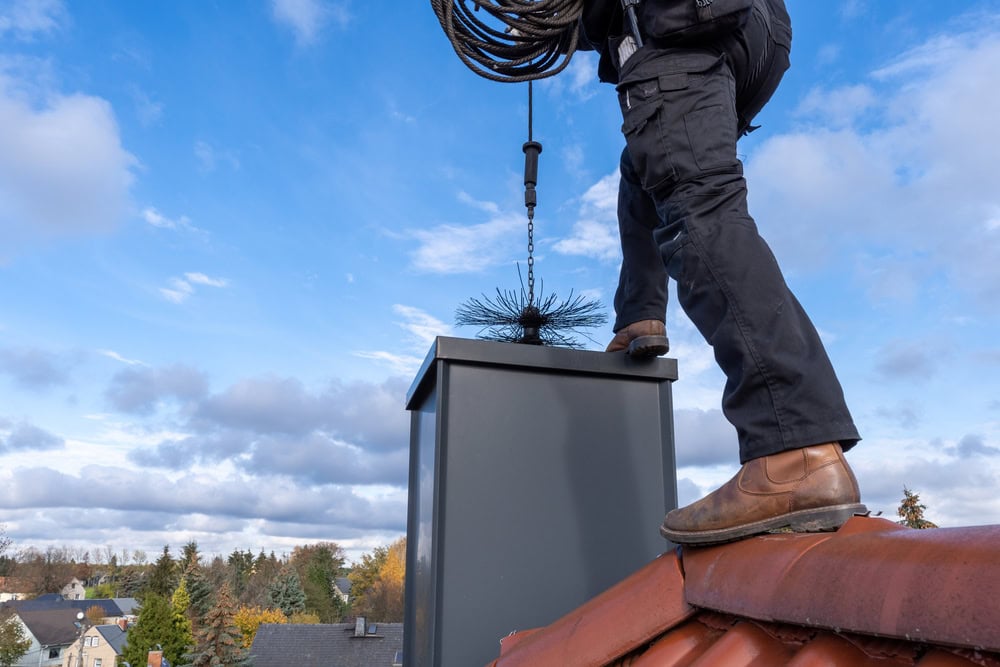
NFPA 211 sets a clear threshold for clay tile liners: any crack wider than 1/8 inch means the liner does not meet the standard’s integrity criteria — regardless of whether the chimney appears to be drafting normally. That last part matters. A chimney can still pull smoke up and out while having liner damage significant enough to allow combustion gases to seep into the surrounding masonry or, in worst cases, into living spaces. Function and safety are not the same thing.
The signs that typically show up during a camera inspection include hairline fractures that have widened over successive winters, sections where the mortar between tile joints has eroded completely, tiles that have cracked along their length due to thermal stress, and areas where moisture infiltration has caused spalling or separation. In older Norfolk County homes — and there are plenty of them — it’s common to find liner damage that has been accumulating for years without producing any obvious symptom.
Freeze-thaw cycling is a major driver of this in eastern Massachusetts. Water gets into an existing crack, freezes, expands, and widens the crack. Do that over ten or fifteen winters and a minor imperfection becomes a structural problem. Homes in Milton, Medfield, and Dedham with original clay tile liners from the mid-20th century are particularly susceptible to this pattern.
When the camera reveals damage that crosses the NFPA threshold, the options are relining — inserting a new metal liner into the existing flue — or, in cases where the liner material can be restored, applying a resurfacing product like HeatShield. The right answer depends on the extent of the damage, the appliance being vented, and the age and construction of the chimney. That’s an assessment we make after seeing what’s actually there, not before.
The liner gets the most attention in a flue inspection, but it’s not the only thing that matters. A thorough chimney safety inspection covers the full system — and several of those components fail quietly in ways that compound over time if they’re not caught.
The chimney crown is the concrete or mortar cap that seals the top of the chimney around the flue opening. It’s designed to direct water away from the flue and prevent it from running down the interior of the chimney. Cracks in the crown are extremely common, especially after a harsh winter, and they’re one of the primary entry points for the water damage that eventually destroys a liner or deteriorates the surrounding masonry.
The chimney cap — the metal cover that sits over the flue opening — keeps rain, debris, and animals out of the flue. A missing or damaged cap is one of the most common findings in a routine inspection, and it’s also one of the easiest to address. We fabricate custom chimney caps in our own sheet metal shop, which means we can fit a replacement to the exact dimensions of your flue rather than ordering a standard size that may not seal properly.
The firebox, damper, smoke chamber, and exterior masonry are all part of the picture as well. Spalling bricks, eroded mortar joints, and a damper that doesn’t seal fully are all findings that affect either the safety or the efficiency of the system. In older Norfolk County homes — particularly the antique colonials and mid-century ranches common in Norwood, Canton, and Walpole — these components often haven’t been assessed in decades.
What we try to do after any inspection is give you a clear picture of what we found, what’s a genuine safety concern, and what’s a maintenance item you can address on your own timeline. The goal isn’t to hand you a list of problems — it’s to give you the information you need to make a reasonable decision about your home.
If you’ve been told you need a chimney inspection — by an HVAC tech, a home inspector, or just your own instinct that it’s been too long — the most useful thing you can do is get a clear picture of what’s actually there. Not a guess, not a worst-case assumption. A camera scan and a straight answer.
We’ve been serving Norfolk County and the surrounding South Shore communities for decades, and the questions we hear most often are the same ones this page covers. Most of the time, an inspection gives homeowners peace of mind. Sometimes it surfaces something that genuinely needs attention. Either way, you’re better off knowing.
If you’d like to schedule an inspection or just want to ask a question before committing to anything, reach out to Above and Beyond Chimney by phone or text at 1-781-635-9582. We’re straightforward about what we find and what it means — and if your chimney is fine, we’ll tell you that too.
Article details:
Share:
Continue learning: